









The Prosumers’ Economy: Community Microgrids, Solar + Storage & New Ownership Models for Townships
As we navigate the opening days of 2026, the structural fragility of India’s urban power grid has reached a critical inflexion point. Throughout 2025, residential electricity demand surged as heatwaves became more protracted, placing unprecedented stress on ageing distribution infrastructure. Data from the Central Electricity Authority (CEA) shows that peak electricity demand across Indian metros has been breaching historical records, increasing stress on urban distribution networks and exposing vulnerabilities in last-mile grid stability.
For the modern residential townships, the traditional reliance on a single-point DISCOM connection—supplemented by expensive, emissions-heavy Diesel Generator (DG) backups—is no longer a viable infrastructure strategy. We are witnessing a fundamental shift in how energy is managed within the built environment. The transition from passive electricity consumption to an active "Prosumer" economy is being driven by the convergence of falling Battery Energy Storage System (BESS) costs and a more permissive regulatory landscape. For developers, this represents a move away from providing mere housing to managing a sophisticated, resilient energy ecosystem that protects both the asset and the resident.
1. Understanding the Prosumer Economy in Residential Real Estate
The term "Prosumer" refers to a consumer who also produces a portion of their own needs. In the context of an Indian township, this signifies a departure from the "dumb" grid model, where power flows in one direction and billing is a monthly administrative formality.
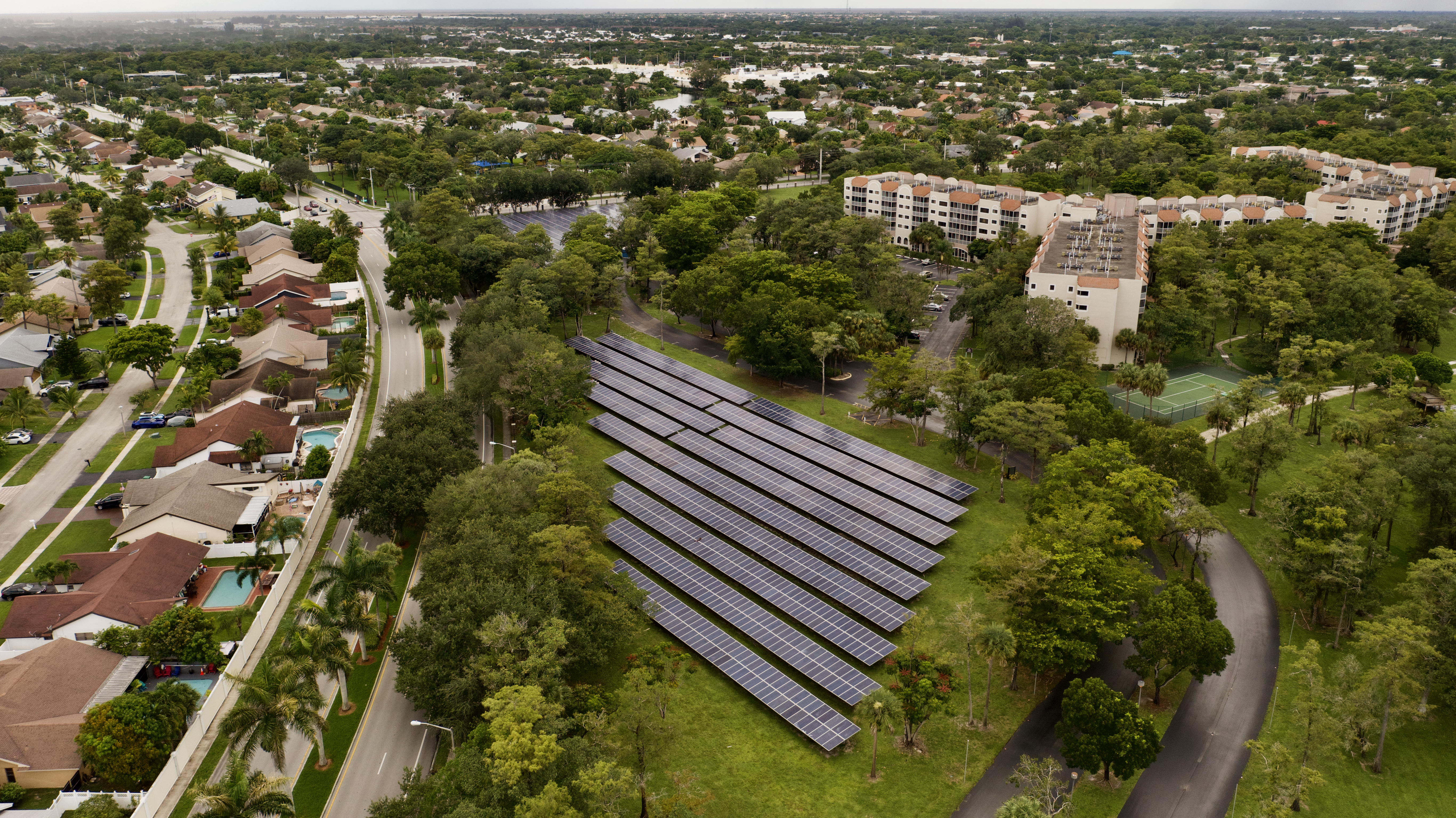
At the township scale, the prosumer model leverages the collective footprint of rooftops, car-parking sheds, and common areas to generate power. According to NITI Aayog’s reports on Distributed Energy Resources (DERs), the inherent advantage of a township is its "load aggregation" capability. By pooling the demand of 500 to 5,000 households, a developer can negotiate better technology prices and create a more balanced demand profile than any individual bungalow or apartment owner could achieve. This scale transforms energy from a utility expense into a manageable asset.
2. Community Microgrids Explained: How Shared Energy Systems Work
A community microgrid is a localised energy grid that can operate both in tandem with the main utility grid and autonomously in "island mode." For a developer, the microgrid is the "nervous system" of a prosumer township.
The Component Hierarchy
Generation Assets: These are typically shared rooftop solar PV arrays or ground-mounted panels in peripheral township areas.
Energy Storage: Centralised BESS units located in the township’s utility block, or distributed batteries within individual towers.
Microgrid Controller: A sophisticated software layer that balances supply and demand in real-time, deciding when to draw from the grid, when to discharge batteries, and when to sell excess power back.
The technological leap in 2026 is the Islanding Capability. During a grid failure, the microgrid controller can instantly disconnect the township from the DISCOM network and sustain critical loads (elevators, water pumps, and emergency lighting) using stored solar energy, entirely bypassing the need for DG sets.
3. Solar + Storage: From Backup Power to Energy Strategy
The integration of storage is what separates a modern prosumer township from a basic solar-equipped building. Historically, solar was only useful when the sun was shining. With the maturity of Lithium-Iron Phosphate (LFP) and emerging Sodium-ion technologies, storage has become the "economic engine" of the township.
Peak Shaving and Load Shifting
Indian DISCOMs are increasingly implementing Time-of-Day (ToD) tariffs, where electricity is significantly more expensive during evening peaks (usually 6 PM to 10 PM). A township with BESS can perform "Peak Shaving"—charging batteries during the afternoon when solar generation is high and discharging them during the evening peak. This "tariff arbitrage" can reduce the effective cost per unit by as much as 30–40%.
The Decline of Diesel
Under the Commission for Air Quality Management (CAQM) mandates, the use of DG sets in NCR and other major hubs is being strictly curtailed. BESS provides a silent, emission-free alternative. While the capital expenditure (Capex) of a battery system remains higher than that of a DG set, the Ministry of New and Renewable Energy (MNRE) points out that the operational expenditure (Opex) of a battery is nearly zero, whereas diesel costs are volatile and high.
4. Ownership & Commercial Models for Township Energy Systems
One of the greatest hurdles to energy independence in townships is not technology, but the "who pays and who owns" question. Three dominant models have emerged in the Indian market:
The Developer-Owned (Bundled) Model
The developer invests the Capex for the microgrid and solar assets as part of the township’s primary infrastructure. The cost is partially recovered through the sale price of the units. The developer (or an appointed subsidiary) manages the grid and bills the residents, providing a lower tariff than the DISCOM while retaining a management fee.
The Third-Party ESCO (Energy Service Company) Model
This is a "Zero-Capex" model for the developer and residents. A third-party firm like Tata Power or ReNew Power installs the equipment and enters into a long-term Power Purchase Agreement (PPA) with the Residents' Welfare Association (RWA). The ESCO earns its return through the sale of power over 15–20 years.
The Resident Co-ownership (RWA) Model
Once the project is handed over, the RWA takes ownership of the assets. This model offers the highest long-term savings for residents but requires significant governance maturity. The RWA is responsible for the maintenance and eventual replacement of batteries and inverters, which requires a robust "sinking fund" strategy.
5. Regulatory Context in India: What Enables and What Restricts
The regulatory landscape for township energy is a patchwork of state-level policies. The Electricity (Rights of Consumers) Rules provide the broad framework, but the execution lies with state regulators (SERCs).
Net Metering vs. Gross Metering
Most states now cap net metering at 500 kW or 1 MW for residential complexes. For larger townships, this often forces a shift to Gross Metering, where all solar power is sold to the DISCOM at a predetermined feed-in tariff, and the residents buy back power at retail rates. This is generally less lucrative than net metering but more predictable for large-scale installs.
Green Open Access Rules
A breakthrough for large townships (with a demand of 100 kW or more) is the Green Energy Open Access Rules, 2022. This allows townships to purchase renewable power from off-site plants if their on-site solar is insufficient, bypassing the DISCOM's expensive industrial or commercial slabs.
6. The Economics: Where the Numbers Actually Work
From a developer’s financial perspective, the "green premium" must translate into clear ROI or asset value protection.
Payback Periods: A well-sized solar-plus-storage system for a township currently has a payback period of 4.5 to 6 years, depending on the state’s tariff structure.
Diesel Offset: In a typical 1,000-unit township, moving from 100% DG backup to a hybrid Solar-BESS-DG model can save upwards of ₹50 lakh to ₹80 lakh annually in fuel and maintenance costs.
Tariff Arbitrage: By using BESS to shift 20% of the township's load away from peak DISCOM hours, the community's energy bill can be reduced by approximately 12–15%.
7. Operational & Governance Risks: The Reality Check
The transition to a prosumer economy is not without friction. Developers must plan for several "friction points" that can derail a project's reputation.
Metering and Billing Complexity
Billing becomes complex when power comes from three different sources (Grid, Solar, and Battery) at different costs. "Virtual Net Metering" software is required to accurately credit each resident for their share of the common solar generation. Poorly implemented billing is a leading cause of RWA-Developer disputes.
Battery Degradation
Lithium-ion batteries typically degrade by 2–3% annually. If the system is over-cycled to maximise tariff arbitrage, the battery life could drop below 10 years. Developers must ensure that the Investment Manager or ESCO has a clear "Augmentation Plan" to replace cells without a sudden spike in resident maintenance charges.
RWA Governance
Managing a microgrid is a technical task. When a developer exits a project, the RWA often lacks the expertise to handle high-voltage switchgear or BESS software. Transitioning these assets requires a "knowledge handover" period of 12–24 months, which many developers fail to provide.
8. Why Prosumer Townships Are a Strategic Advantage
In the competitive landscape of 2026, "Energy Resilience" has replaced "Clubhouse Size" as a primary differentiator for savvy homebuyers.
Lower Maintenance Charges: By reducing the common area power bill—which typically accounts for 30–50% of an RWA’s budget—prosumer townships offer lower monthly maintenance costs.
Asset Value Protection: As environmental regulations tighten, buildings with high DG dependence will face "brown discounts" in the resale market. Prosumer-ready townships are future-proofed against carbon taxes and strict air quality norms.
Infrastructure De-risking: By producing 30% of their own power, townships reduce their dependence on the municipal grid, which is increasingly prone to "transformer burns" and voltage fluctuations during peak heatwaves.
9. Conclusion: Energy Independence Is Gradual, Not Absolute
The "Prosumer Economy" in Indian real estate is not about total autonomy from the grid—that remains an expensive fantasy for most. Instead, it is about Strategic Risk Management. It is about ensuring that a township has the intelligence to produce its own power, the capacity to store it, and the commercial structure to benefit from it.
The move toward community microgrids represents the professionalisation of residential energy. It requires developers to stop thinking as builders and start thinking as utility planners. Those who master the economics of storage and the nuances of state-level regulation will not only build more resilient communities but will also define the new standard of premium Indian housing. In 2026, a truly luxury township is no longer one that has the best lights, but one that can keep them on when the rest of the city goes dark.