










From Dust to Durable: How Prefabrication & Modular Construction Are Rewriting Time-to-Market in India
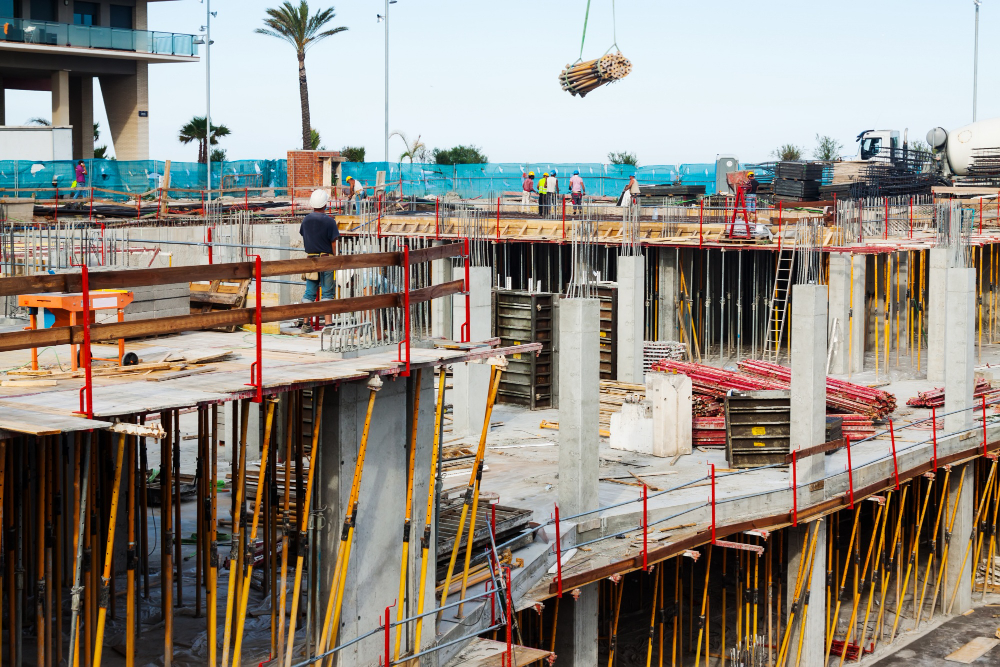
Stand at the edge of a typical residential construction site in Gurugram or Mumbai, and your senses are immediately assaulted. The air hangs heavy with suspended particulate matter (PM 2.5), the cacophony of grinding metal competes with traffic horns, and a supervisor shouts over the din to manage a shifting workforce of migrant labourers. It is a familiar scene of organised chaos — one that has defined Indian real estate for decades.
Now, cut to a manufacturing facility in Krishnagiri or Pune. The floor is clinically clean—robotic arms weld steel frames with sub-millimetre precision. There is no dust. There is no rain to stop work. Bathroom pods, complete with tiling and plumbing, roll off an assembly line like cars. This is not science fiction; it is the quiet industrial revolution of Indian real estate.
We are witnessing a fundamental shift from construction to assembly. As the Indian construction sector races toward a projected valuation of USD 1.4 trillion by 2047, the old brick-and-mortar methods are hitting a scalability ceiling. Prefabrication and modular construction are no longer niche alternatives; they are the only viable path to rewriting the industry’s most stubborn metric: time-to-market.
Defining the Shift: Beyond the 'Container Home' Myth
In the Indian context, there is often confusion between "prefab" and "temporary structures." It is crucial to dismantle this perception. We are not talking about flimsy site offices or repurposed shipping containers.
Prefabrication serves as the overarching term for any construction process where building components are manufactured in an off-site factory and then transported to the project location for assembly. In India, this is most commonly realized through Precast Concrete technology. This involves casting massive structural elements like wall panels, beams, and slabs in a controlled factory environment, where they are cured to optimal strength before ever arriving at the construction site.
Modular Construction, or Volumetric Construction, takes this a step further. It involves creating entire three-dimensional units (modules)—like a fully finished room or a bathroom pod—in the factory. These are trucked to the site and stacked like Lego blocks to form the building.
One relies on craftsmanship and variable conditions; the other relies on process and precision.
The Catalyst: Why India is Ready Now
Why is this conversation happening now? Precast technology has existed for decades. The urgency today stems from a convergence of economic pressure and technological readiness.
1. The Capital Efficiency of Speed
In a high-interest-rate environment, time is literally money. Traditional construction cycles for a high-rise in India can span 36 to 48 months. With modular techniques, this can be compressed significantly. McKinsey & Company reports that modular construction can accelerate project timelines by 20% to 50%. For a developer servicing high-cost debt, shaving a year off the construction schedule improves the Internal Rate of Return (IRR) drastically, allowing for faster capital rotation.
2. The Labour Paradox
While India has a vast population, the availability of skilled construction labour is becoming erratic. The pandemic revealed the fragility of relying on transient on-site labour. Modular construction shifts the reliance from hundreds of on-site labourers to a smaller, specialised team of factory technicians and site assemblers.
3. Government Validation
The state itself is actively dismantling scepticism regarding durability. Through the Global Housing Technology Challenge (GHTC), the Ministry of Housing and Urban Affairs (MoHUA) has championed modern construction methods, commissioning six "Light House Projects" (LHPs) across the country to showcase their viability. The successful completion of over 1,000 homes in Chennai using precast concrete in record time sends a definitive signal to the private sector: this technology is not just robust, but fully market-ready.
Hard Benefits: Speed, Quality, and Predictability
The business case for prefabrication is built on three pillars that directly impact the bottom line.
1. Unmatched Speed
By running site preparation (excavation and foundation work) and factory manufacturing in parallel, developers can slash schedules. Research indicates that precast systems can reduce total project duration by 20–50%. This "concurrent engineering" means the building is effectively being built while the ground is being dug.
2. Factory-Grade Quality
A wall cast in a robotic mould is perfectly straight. It does not require thick layers of plaster to hide undulations, nor does it suffer from the honeycombing common in manual casting. The concrete is cured under controlled conditions, ensuring consistent strength (typically M40/M50 grade) that on-site mixing often fails to achieve. This durability directly reduces long-term defect-liability claims for developers.
3. Cost Predictability
While the upfront capital expenditure (capex) for prefab can be higher, the lifecycle costs are lower. Reduced wastage, fewer accidents, and the elimination of weather-related delays create a predictable financial model. A ScienceDirect study highlights that despite higher initial transport costs, the overall project cost often balances out due to labour savings and earlier asset monetisation.
4. Safety & Compliance
Moving dangerous work (cutting, welding, working at heights) to a factory floor significantly reduces site accidents.
5. Sustainability & Waste Reduction
Indian cities are choking on construction and demolition (C&D) waste. Traditional sites are notorious for material wastage—sand, cement, and bricks lost to breakage or theft. Modular construction reduces waste by up to 90% through material optimisation. With C&D waste management becoming a priority for urban bodies like the Delhi Pollution Control Committee, this is a critical compliance advantage.
The Indian Hurdle: Challenges to Adoption
Despite the clear benefits, mass adoption faces friction. Real estate is a local business, and India presents unique logistical hurdles.
1. The Logistics Nightmare
Transporting a 3D volumetric module or a 10-tonne precast slab from a factory in the industrial outskirts to a site in a congested metro city is a logistical feat. Indian roads, with their unpredictable traffic, low bridges, and tight turning radii, are not always friendly to oversized freight. This limits the "economic radius" of a prefab factory; usually, the project site must be within 200–300 km of the manufacturing hub to remain cost-effective. Getty Images
2. Upfront Capex vs. Lifecycle Cost
Modular construction requires a heavy upfront investment. You are essentially paying for materials and labour before the work starts, whereas traditional construction allows developers to stagger cash outflows. For smaller developers with limited liquidity, this front-loaded cash flow is a barrier.
3. The 'Solid' Perception
The Indian homebuyer equates "strength" with "brick and mortar." There is a psychological barrier to walls that sound different when knocked on, or the idea of a home being "assembled." However, this is changing as buyers realise that high-grade precast concrete is often denser and stronger than manually laid brickwork.
A Roadmap for Developers: How to Transition
For developers looking to pivot, the switch to modular cannot be a binary choice. It requires a phased roadmap:
Phase 1: Hybrid Adoption (Pods & Elements)
Start small. Implement prefabricated bathroom pods. Bathrooms are the most complex part of a residential build, involving multiple trades (plumbing, waterproofing, tiling, electrical) in a tiny space. Prefabricating these eliminates a major bottleneck. Combine this with precast staircases and boundary walls.Phase 2: Design for Manufacture and Assembly (DfMA)
You cannot design a traditional building and then decide to "make it modular." The decision must happen at the architectural drawing board. Developers must adopt DfMA principles, with standardisation as a key principle. If every apartment has a different window size, modular fails. Standardisation drives the economies of scale that make prefab profitable.Phase 3: Strategic Supply Chain Partnerships
Instead of treating contractors as transactional vendors, developers need long-term partnerships with prefab manufacturers. This ensures that the factory capacity is reserved for their pipeline, mitigating supply chain risks.
Real-World Innovators: Who is Doing it Right?
The proof of concept is already visible across the Indian skyline.
B.G. Shirke Construction Technology:
Often called the grandfather of precast in India, B.G. Shirke has been instrumental in executing massive housing projects for state bodies like DDA (Delhi Development Authority) and MHADA (Maharashtra Housing and Area Development Authority). They have successfully delivered tens of thousands of dwelling units using the ‘3-S’ Prefab Technology (Strength, Safety, and Speed), proving that prefabrication is the only way to meet India's affordable housing deficit at scale.
Larsen & Toubro (L&T):
L&T has pushed the envelope from precast to 3D Concrete Printing. In 2023, they constructed India’s first 3D-printed post office in Bengaluru in just 43 days—a project that would traditionally take months. While 3D printing is currently a premium or niche solution, L&T’s investment signals a long-term commitment to automated construction.
Conclusion: The Inevitability of Assembly
The romanticism of the dusty construction site is fading. In its place, a new aesthetic of efficiency is emerging—one defined by the hum of the factory rather than the hammer on the chisel.
For the Indian real estate market, prefabrication is not merely a trend to observe; it is an evolution to adopt. The market drivers—urbanisation, capital costs, and sustainability—are relentless. The developers who cling to purely traditional methods may find themselves priced out by competitors who can deliver superior products faster and with less waste.
We are moving from an era of building to an era of assembling. From dust, we are finding durability. And in a country hungry for infrastructure and homes, this shift cannot happen fast enough.