








Placemaking as Value-Creation: Cultural Programming, Local Retail & Night-Economy for Townships
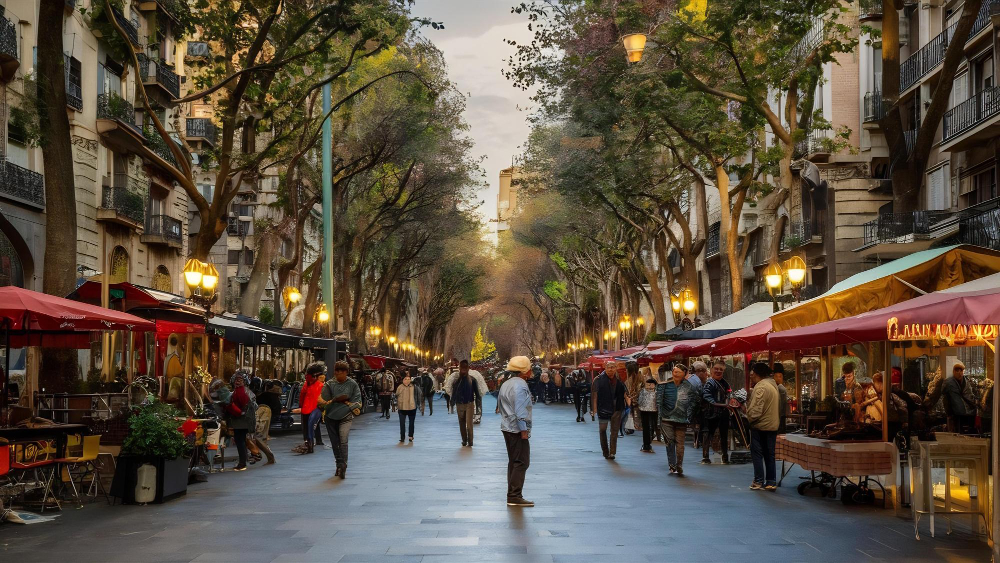
On paper, two townships can appear identical. Similar land parcels. Comparable construction quality. Matching apartment sizes and amenity lists. Yet one feels alive — weekend markets in the plaza, children rehearsing for a festival performance, cafés buzzing well after sunset — while the other retreats into silence by early evening. Over time, that difference stops being atmospheric. It begins to show up in resale prices, rental demand and investor confidence.
This is where placemaking moves beyond design language and becomes a disciplined value-creation strategy.
Across India’s expanding urban corridors, integrated townships are no longer competing only on specifications or price per square foot. They are competing on experience density — how active, layered and socially connected a place feels across seasons and time bands. Cultural programming, retail curation and a thoughtfully structured night economy are emerging as economic infrastructure, not lifestyle add-ons. And the Industry research increasingly supports this shift.
Placemaking in the Indian Urban Context
The Urban Land Institute defines placemaking as the process of creating quality places where people want to live, work, and play. In India, this idea has gained relevance alongside rapid urbanisation. According to India’s Census 2011, 31.16% of India’s population lived in urban areas. United Nations World Urbanization Prospects suggest this could approach 40% by 2030. That transition represents tens of millions of people moving into cities and peri-urban clusters over the coming decade.
As density increases, the definition of “housing” evolves. Knight Frank India’s India Real Estate Report 2024 notes that lifestyle infrastructure and integrated developments remain strong demand drivers in major metropolitan regions. Buyers are not only evaluating connectivity and carpet area; they are assessing the vibrancy of the micro-environment.
The pandemic accelerated this behavioural shift. Work-from-home cycles heightened sensitivity to neighbourhood quality. Access to open spaces, community interaction and nearby conveniences became non-negotiable. In this context, placemaking is not decorative. It is competitive positioning.
Cultural Programming: The Economic Infrastructure of Engagement
Festivals, farmers’ markets, art installations, fitness boot camps, seasonal celebrations and community sports leagues are often categorised as “soft” initiatives. In reality, they function as economic catalysts.
India’s domestic travel rebound provides a useful parallel. The Ministry of Tourism reported over 1.7 billion domestic tourist visits in 2022 as mobility normalised post-pandemic. While a township is not a tourist hub, the behavioural principle remains consistent: people gravitate towards experiences.
Within integrated townships, structured cultural calendars generate measurable benefits:
Increased footfall in internal commercial zones
Higher cross-spend across retail and food outlets
Stronger inter-resident relationships
Enhanced brand perception beyond the immediate catchment
JLL India’s retail research consistently highlights that experiential centres deliver longer dwell times than purely transactional formats. Dwell time is directly linked to spending intensity and repeat visits.
Regular cultural programming also builds what urban economists call social capital. When residents interact frequently in shared spaces, community attachment strengthens. This reduces churn, supports rental stability and improves referral-driven sales. A township that feels socially active commands a perception premium over one that is merely complete.
Importantly, programming must be curated rather than sporadic. A predictable annual calendar — festivals aligned with regional traditions, weekend events during peak seasons, curated art or music engagements — transforms open areas into recurring activation zones. Over time, that consistency builds identity.
Retail Curation: Designing for Destination Value
Retail within townships is often treated as a convenience annexe: grocery store, pharmacy, basic services. That model limits upside. The true economic potential lies in curation.
CBRE India’s Retail Market View 2023 reported sustained leasing momentum across major cities, with premium developments achieving high occupancy levels even amid macro volatility. Retail performance correlates strongly with tenant mix quality and experiential zoning.
In township ecosystems, retail curation should address four pillars:
Daily essentials that ensure baseline footfall.
Experience-led food and beverage clusters that extend dwell time.
Wellness and lifestyle anchors such as gyms, clinics and speciality services.
Hyperlocal or boutique concepts that add distinctiveness.
According to the National Restaurant Association of India’s India Food Services Report 2023, the country’s food services industry has crossed the ₹4 lakh crore mark, with organised players steadily increasing their share of the market. This scale is significant for township planning. Dining is no longer an ancillary amenity tucked into a corner of a mixed-use block. It is one of the most reliable generators of repeat visits, evening activity and cross-spend. In well-designed developments, food and beverage acts as the anchor that sustains daily footfall long after essential retail has closed.
Strategic clustering matters. Grouping cafés, casual dining and dessert outlets around pedestrian plazas encourages evening congregation. Mixed-use frontage improves vibrancy and perceived safety. Active ground floors discourage vacancy-driven stagnation.
Retail performance metrics must be monitored rigorously. Stabilised occupancy rates above 90%, steady growth in sales per square foot and strong tenant renewal ratios are indicators of ecosystem health. For developers, healthy commercial performance supports rental yields and strengthens overall township valuation.
The Emergence of the Night Economy
Indian residential districts historically wound down early. That pattern is shifting, particularly in cities with large working professional populations.
The concept of the night economy — economic activity between evening and early morning — has been widely examined in global urban research. In India, discussions around extended commercial hours and structured nighttime activity have gained policy attention in select states.
RBI data on private final consumption expenditure shows that household consumption has remained resilient in the post-pandemic phase. Younger demographic cohorts allocate a significant portion of their discretionary income towards dining, leisure and social experiences. This behavioural pattern supports extended evening activity.
In township environments, the night economy need not imply nightlife excess. It means:
Well-lit pedestrian promenades
Safe, active public spaces
Evening markets and performances
Late-operating cafés and community venues
Safety infrastructure is non-negotiable. Adequate lighting, CCTV coverage and active storefronts increase perceived security. When residents feel comfortable using shared spaces after sunset, utilisation multiplies.
The economic effect can be measured through:
Evening footfall growth
Revenue concentration during 6–10 pm windows
Increased rental demand among young professionals
Higher F&B tenant performance
A township active across time bands generates greater economic productivity from the same built footprint.
Placemaking and Secondary Market Performance
Primary sales benefit from marketing narratives. Secondary markets respond to lived experience.
Global research from Knight Frank consistently highlights that neighbourhood vibrancy and amenity ecosystems influence long-term residential performance. In the Indian context, integrated developments with active retail and programming often demonstrate stronger liquidity in resale transactions.
Three structural advantages emerge:
First, a perception premium. Buyers entering the secondary market are paying for an established ecosystem rather than a promise.
Second, rental resilience. Active environments attract tenants, supporting steady yields.
Third, lower vacancy risk. Engaged communities reduce outward migration.
Secondary market strength is not measured only by price appreciation. Transaction velocity — how quickly units transact when listed — is equally important. Vibrant ecosystems typically exhibit shorter time-on-market compared to isolated housing clusters.
For investors and end-users alike, liquidity is a form of security. Placemaking directly influences that liquidity.
Metrics That Matter: Measuring Placemaking ROI
To manage placemaking effectively, developers must move from anecdotal success to data-driven metrics.
Commercial KPIs
Footfall per day / per sq. ft. – Captured through digital counters or mobility analytics.
Dwell Time – Longer average stays indicate experiential strength.
Retail Occupancy Rate – Target above 90% in stabilised phases.
Sales per Sq. Ft. – Tenant-reported performance.
Tenant Retention Rate – Renewal ratios above 75% reflect ecosystem stability.
Residential KPIs
Absorption Rate – Speed of inventory sales post-launch.
Rental Yield Differential – Compare yields with non-integrated micro-markets.
Resale Premium Spread – Track percentage premium over comparable standalone projects.
Time-on-Market for Resales – Shorter cycles indicate liquidity strength.
Engagement KPIs
Event Participation Rate – % of residents attending programmed events.
Repeat Attendance – Indicator of programme relevance.
Digital Engagement Growth – Community platform usage metrics.
Technology enables disciplined tracking. Smart mobility analytics estimate footfall patterns. Aggregated point-of-sale data reveals commercial trends. CRM systems capture participation rates. Data transforms placemaking from intuition into measurable asset management.
Practical Adoption Strategy for Developers
Implementation cannot be an afterthought. It must be integrated into the Capital Expenditure (CAPEX) and Operating Expenditure (OPEX) models from day one.
For developers, placemaking must be institutionalised rather than episodic.
Establish a dedicated placemaking and community management team with clear performance targets.
Develop an annual programming calendar aligned with cultural seasons and demographic preferences.
Implement structured retail zoning guidelines before leasing begins.
Allocate operating budgets with defined ROI benchmarks.
Integrate data dashboards tracking commercial and residential KPIs quarterly.
Prioritise safety infrastructure before night activation initiatives.
The capital expenditure for programming and activation is modest relative to the total project investment. Yet the compounding impact on brand equity, liquidity and rental performance can be substantial.
Engineering Long-Term Value
Real estate fundamentals — location, connectivity, build quality and governance — remain foundational. But in dense urban markets, they are baseline requirements rather than differentiators.
Placemaking is economic engineering. Cultural programming sustains engagement. Retail curation drives recurring footfall. A structured night economy extends usability across time. Together, they increase resident stickiness, tenant retention, and secondary-market confidence.
As Indian cities continue to expand and competition intensifies, townships that function as living ecosystems — rather than static clusters of buildings — will command pricing power and liquidity advantages.
Square footage creates supply. Activation creates demand. The developers who recognise that distinction early will define the next phase of value creation in Indian real estate.