









Climate Risk & Real Estate: Why Future-Proofing Is Now a Pricing Factor
1. Climate Risk Is No Longer Theoretical
For decades, the real estate sector treated severe weather anomalies as black swan events—rare, unpredictable, and largely outside the scope of traditional financial modelling. That era is definitely over. Today, extreme heatwaves, catastrophic urban flooding, and acute water shortages are no longer isolated events; they are recurring, predictable patterns.
This environment is forcing a structural shift in real estate. The conversation has moved out of the realm of corporate social responsibility and directly into the boardroom. Climate risk is no longer an external, environmental issue—it is being aggressively priced into the asset. For developers, investors, and informed homebuyers, the core thesis is clear: the physical vulnerabilities directly dictate its commercial viability. Real estate is being forced to respond, and the market is already separating resilient assets from vulnerable liabilities.
2. The Four Core Climate Risks Impacting Real Estate
To understand how climate impacts valuation, we must first categorise the specific risks threatening urban infrastructure. These are not abstract concepts; they are daily operational challenges.
Heat Stress: The urban heat island effect is multiplying the intensity of rising baseline temperatures. Concrete and asphalt absorb and trap heat, turning poorly planned developments into thermal traps. Data from the Ministry of Earth Sciences on heatwave frequency indicate a sharp, sustained increase in extreme-temperature days, directly stressing building cooling systems and occupant comfort.
Flooding: As weather patterns become more volatile, short-duration, high-intensity rainfall is overwhelming outdated municipal infrastructure. Drainage failures and historical urban planning gaps mean that developments without internal water management face severe inundation risks, threatening basement parking, electrical grids, and ground-floor assets.
Water Scarcity: Groundwater depletion is arguably the most acute of the silent crises in Indian real estate. According to NITI Aayog’s insights on urban water stress, several major metropolitan areas are rapidly approaching critical groundwater depletion. Properties that rely entirely on municipal or borewell water, without internal harvesting, are highly exposed.
Energy Instability: Rising temperatures trigger massive spikes in cooling demand, which in turn destabilise local power grids. Power reliability issues are becoming common during peak summer months, forcing developments to rely on expensive, polluting diesel generators.
3. From Environmental Issue to Financial Variable
The transition from viewing climate as an environmental issue to a hard financial variable is rooted in the cost of ownership. Climate risk directly accelerates asset degradation and increases a property's operational and maintenance (O&M) expenditures.
When a building is subjected to continuous heat stress, its HVAC systems run longer and harder, leading to higher baseline cooling costs and frequent equipment failure. When a property floods, the repair costs, rising insurance premiums, and subsequent structural wear are borne entirely by the residents. Over time, these escalating costs severely strain the Resident Welfare Association (RWA) budgets. An asset that requires constant, expensive intervention to remain habitable simply ceases to be a premium asset. Climate risk, therefore, is a direct tax on the long-term yield and affordability of the real estate.
4. Buyer Behaviour Is Changing
Real estate markets are inherently driven by buyer psychology, and that psychology is shifting rapidly. The modern homebuyer—particularly the High Net Worth Individual (HNI) and Non-Resident Indian (NRI) segments—is becoming deeply risk-aware.
They are no longer seduced merely by imported marble or designer lobbies; they are looking closely at the engineering that protects those finishes. There is a growing, measurable preference for better-planned communities that offer systemic reliability. Buyers are asking pointed questions about water-source redundancy, flood mapping, and the sustainability of power backup. They have witnessed the chaos of flooded basements and dry taps in heavily marketed luxury projects, and their capital is moving toward developments that can guarantee operational continuity regardless of the external weather conditions.
5. Design Response: Building for Resilience
Future-proofing is not a marketing overlay; it is fundamentally design-led. To mitigate climate risk, developers must embed resilient infrastructure in the master plan's DNA.
How do we build for a changing climate? The World Green Building Council points to passive design as the starting point, using smart orientation and advanced windows to block out solar heat. Next come active systems: aggressive water harvesting, drainage built for today's extreme downpours rather than past averages, and hybrid energy setups that replace old diesel grids with solar power. By spending more on intelligent design upfront, developers can completely shield their projects from climate shocks—protecting both the building and the investment.
6. Landscape as Climate Infrastructure
In traditional real estate, landscaping is treated as an aesthetic afterthought—a cosmetic addition to fill the gaps between concrete towers. In the new economics of climate resilience, the landscape is critical climate infrastructure.
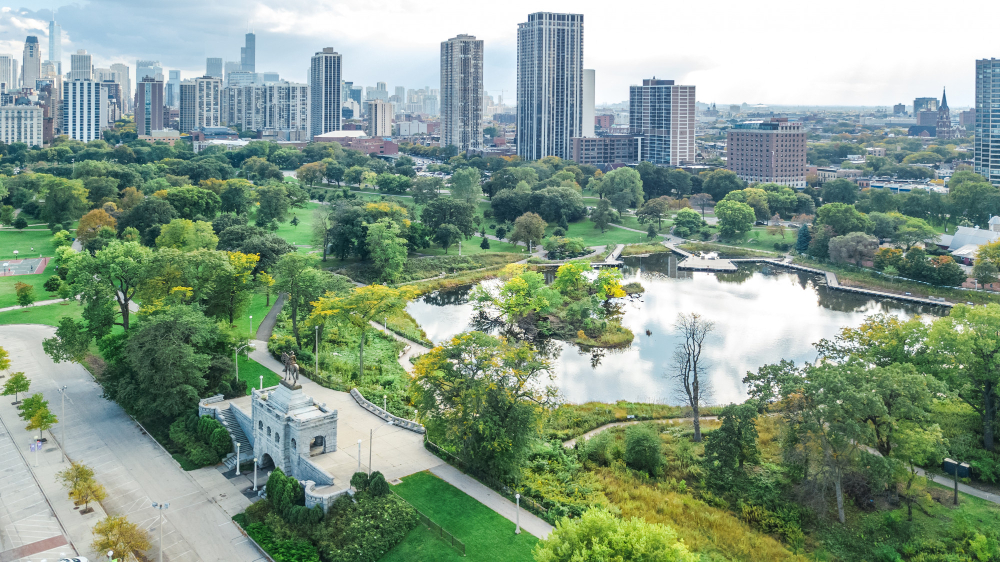
A strategically designed tree canopy does more than look appealing; it provides a measurable cooling effect, significantly reducing the urban heat island impact within the development. Previous surfaces, bioswales, and retention ponds serve as vital water-absorption zones, mitigating flood risk by naturally managing surface runoff. Intelligent landscaping provides precise microclimate control, lowering ambient temperatures by several degrees and reducing the cooling load on the buildings. When executed correctly, green spaces are highly engineered biological systems that directly support the project's long-term thermal comfort and financial efficiency.
7. Valuation Impact: Premium vs Discount
The most profound shift in the real estate sector is the bifurcation of property valuations by climate resilience. We are moving toward a market reality where the physical risk translates directly into a financial discount.
Climate risk is officially a pricing factor. According to the IPCC, high-risk properties located in flood plains, water scarcity, and heat islands are facing a steep "liquidity discount" as buyers slash offers to offset future climate costs. On the flip side, sustainable, future-proofed properties are securing a "resilience premium." By offering lower operating costs and uninterrupted comfort, resilient real estate is attracting bigger buyer pools and moving off the market faster.
8. Indian Context: Why This Matters More Here
While climate risk is global, India’s unique position drastically raises the financial stakes. The country is experiencing one of history’s largest waves of rapid urbanization, pushing already fragile municipal infrastructure to its limits.
The World Bank highlights three compounding vulnerabilities destroying urban stability: high density, ageing infrastructure, and extreme weather shifts. When a local grid collapses in a heatwave or municipal water stops running, a residential property has to survive entirely on its own. Because developers cannot count on the city to safeguard their investments, building for climate resilience has shifted from an eco-friendly "nice-to-have" to a hard business necessity for protecting asset value.
9. The Cost of Ignoring Climate Risk
For developers and investors who choose to ignore these shifting dynamics, the commercial penalties will be severe and compounding. Treating climate resilience as an optional, value-engineered line item is a fundamentally flawed capital allocation strategy.
Ignoring climate risk guarantees higher operating costs post-handover, which quickly sours resident relations and damages the developer's brand equity. Furthermore, as systemic vulnerabilities become apparent—such as recurring basement flooding or chronic summer water shortages—the secondary market will ruthlessly penalise the asset. Reduced resale value and permanently lower rental demand are the inevitable outcomes. In the modern market, bad environmental planning is simply bad financial planning, and the market will quickly isolate developments that fail to protect their occupants.
10. The Future: Resilience as Standard
Looking ahead, the real estate industry will see a shift in resilience, from a premium differentiator to a non-negotiable baseline. Regulatory frameworks, banking underwriting standards, and insurance premiums will increasingly scrutinise the climate readiness of new developments.
The market premium will shift entirely toward sustainability and self-sufficiency. Developments that cannot demonstrate their ability to withstand the next decade of climate volatility will struggle to secure premium pricing, regardless of their postcode. Climate-aware design will become the standard metric of luxury, where the ultimate amenity is not a clubhouse, but the assurance of uninterrupted, comfortable living.
11. The Next Premium Is Protection
The metrics for evaluating prime real estate have permanently evolved. Location, layout, and luxury finishes remain important, but they are no longer sufficient to guarantee long-term value.
In the coming decade, the most valuable real estate will not just be well-located—it will be well-protected. At Trident Hills, we view climate resilience not as a compliance checklist, but as a core pillar of our financial strategy and product design. By engineering our developments to manage water scarcity, mitigate heat stress, and operate efficiently through climate volatility, we ensure that our properties remain safe, highly liquid, and deeply valuable for generations to come.