








Why Plotted Developments Offer More Long-Term Flexibility Than Apartments
When choosing a home, most buyers evaluate their purchase based on their current circumstances: their salary, family size, and immediate commuting needs. This focus on immediate convenience is one of the key reasons apartments have become a preferred housing format across many urban markets in India over the last two decades. High-rise developments offer an attractive, hassle-free package for the present moment: turnkey convenience, professional maintenance, 24/7 security, and immediate access to established amenities.
But life does not stand still. Over a fifteen- to twenty-year horizon, households undergo significant transitions. Families grow, career paths evolve into work-from-home or entrepreneurial ventures, children mature into independent adults, and elderly parents require specialised care.
This is where the fundamental difference between housing types becomes clear. While an apartment is an excellent tool for managing the present, its fixed structural boundaries make it difficult to adapt to future changes.
For buyers focused on multi-generational planning and long-term wealth preservation, plotted developments offer a compelling alternative. Rather than confining a family to a predetermined floor plan, buying a plot provides the underlying land and structural flexibility needed to adapt to whatever the future holds.
1. The Core Trade-off: Today’s Turnkey vs. Tomorrow’s Optionality
The choice between a premium high-rise apartment and a master-planned plot is not a question of which asset is inherently superior. Instead, it is a reflection of different priorities.
Apartments are designed to maximise immediate density and convenience. They reduce the homebuying process to a simple transaction: you pay, receive the keys, and move into a finished space.
However, this convenience comes with a long-term compromise: a complete lack of structural flexibility. The carpet area you buy today is exactly the carpet area you will own two decades from now.

Plotted developments invert this equation. While building a home requires more upfront planning and decision-making than buying a turnkey apartment, it provides complete long-term control. A plot is a flexible real estate asset that allows you to expand and modify your living space as your family's needs change over time.
2. Expansion Flexibility: A Home That Scales with Life Stages
The most significant limitation of an apartment is its rigid structure. If an expanding family needs an extra bedroom, a dedicated home office, or an independent suite for elderly parents, the only solution within an apartment block is to sell the property and move, or purchase an entirely separate unit. Both options involve significant transactional friction, financial costs, and logistical disruptions. 
In contrast, homes built on residential plots often offer greater scope for future expansion, subject to local zoning regulations, building bylaws, plot dimensions, and statutory approvals.
This adaptability allows a home to grow alongside the family:
The Early Years: A young family can build a comfortable ground-floor villa that fits their initial budget and space requirements.
The Growth Phase: As children grow or career needs change, additional floors can be built to add study areas, home entertainment spaces, or independent bedrooms.
The Empty Nest Phase: Upper floors can eventually be converted into independent rental units or guest suites, providing secondary income or private spaces for visiting family members.
3. Architectural and Customisation Freedom
When you purchase an apartment, you are buying into the developer's architectural vision. While you can modify interior finishes, paint colours, and cabinetry, you cannot alter the positioning of structural pillars, main plumbing shafts, or window placements. The home’s exposure to natural light, cross-ventilation, and outdoor spaces is permanently fixed.
Plotted developments grant complete creative freedom over the entirety of the envelope:
Biophilic Optimization
Owners can orient their homes to improve natural ventilation and daylight access, which may contribute to greater indoor comfort and potentially reduce dependence on artificial lighting and climate control systems.
Lifestyle Tailoring
Whether your priority is a double-height art gallery lounge, an internal open-to-sky courtyard, a private basement fitness studio, or an organic kitchen garden, a plot allows you to build around your personal passions rather than adapting to a standard layout.
This flexibility shifts the home from a compromise into a personalised environment designed to support your family's specific lifestyle and well-being.
4. The Wealth Equation: Land Ownership and Long-Term Value Dynamics
From an investment perspective, apartments and plots perform very differently. When you buy an apartment, your purchase price is split between two components: the value of the physical structure and an abstract Undivided Share (UDS) of the underlying land.
The challenge with this structure is that concrete, elevators, plumbing systems, and mechanical fixtures depreciate over time. As an apartment building ages, it requires increasingly costly maintenance simply to protect its market value.

Land, however, is a scarce, non-depreciating asset. Market studies by firms such as Anarock have found that residential plots in well-connected growth corridors often exhibit strong long-term appreciation potential, particularly where infrastructure development and land scarcity sustain demand.
A plot buyer owns a specific, physical parcel of earth. While any building constructed on the plot may age, the underlying land value tends to grow steadily as urban space becomes increasingly scarce.
5. Low-Density Design and the Luxury of Space
Privacy, quiet surroundings, and breathing room increasingly define modern luxury. High-rise developments, by their very nature, collect hundreds of households into a single vertical footprint. This density can lead to shared walls, elevator wait times, parking congestion, and a lack of private outdoor areas.
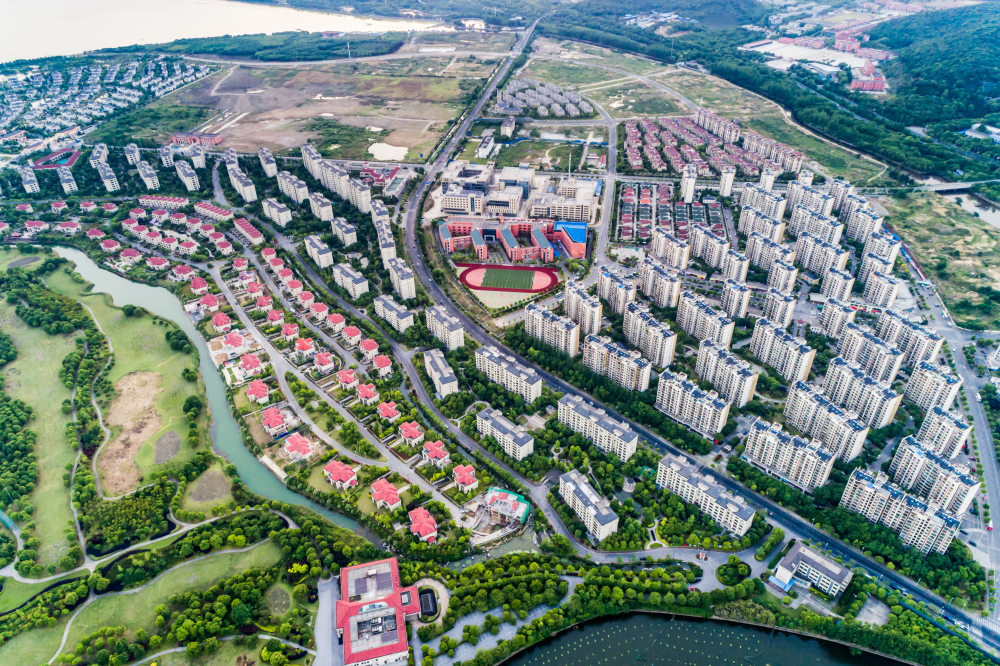
Plotted developments offer an inherently low-density alternative. Urban planning research suggests that lower-density neighbourhoods can offer advantages, including reduced pressure on shared infrastructure, greater access to open spaces, and improved perceptions of privacy and environmental comfort.
Living without shared walls or overhead neighbours provides an immediate sense of privacy and calm. It allows families to enjoy their home without the daily disruptions often associated with high-density vertical complexes.
6. Multi-Generational Continuity in the Indian Context
In India, residential choices are deeply intertwined with family structures. Multi-generational living—where grandparents, parents, and children share a home—remains a core cultural value. However, managing this dynamic harmoniously requires a layout that balances shared family areas with personal privacy.

Plotted homes are often well suited to this balance because they allow families to design separate living zones while maintaining a shared household environment. A custom-built home allows for a layout where elderly parents can live comfortably on a zero-step ground floor, the middle generation occupies the first floor, and independent older children have private spaces on the upper level. This arrangement preserves family closeness while ensuring everyone has the privacy they need.
7. The Plotted Township Model: Combining Autonomy with Infrastructure
Historically, buying an independent plot in India came with significant operational challenges. Standalone plots were often located in poorly planned areas that lacked reliable power grids, central sewage lines, paving, and professional security. Property owners had to handle municipal approvals and security arrangements entirely on their own.
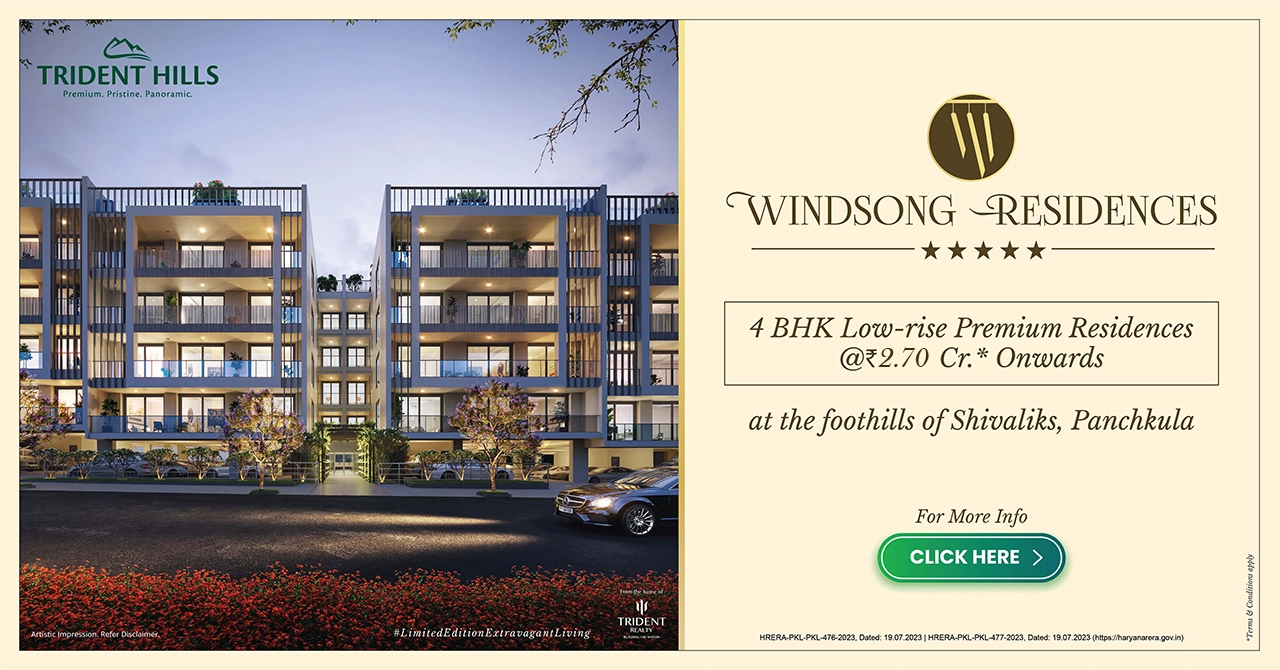
Modern master-planned communities have solved this problem by introducing the plotted township model. Projects like Trident Hills in Panchkula and Trident Parktown in Delhi-NCR offer a balanced solution: they combine the autonomy of plot ownership with the infrastructure and security of a premium gated community.
By choosing a plot within a master-planned township, buyers get the best of both worlds:
Infrastructure Readiness: Access to planned infrastructure such as underground utility networks, organised road systems, water management systems, and modern communication connectivity, subject to project specifications.
Comprehensive Security: Perimeter fencing, 24/7 CCTV monitoring, and managed access checkpoints provide a safe environment for families.
Clubhouse and Amenities: Immediate access to shared spaces like swimming pools, sports complexes, and manicured parks, managed by professional property teams.
This model removes the logistical challenges traditionally associated with independent construction, allowing families to focus on designing their ideal home within a well-maintained community.
Conclusion: Investing in Your Future Flexibility
Every property format serves a different purpose. Apartments offer convenience, managed living, and immediate occupancy, while plotted developments provide greater flexibility for buyers who value personalisation and long-term adaptability.
For families planning across multiple life stages, the ability to expand, redesign, and customise a home over time can be a meaningful advantage. Modern plotted townships combine this flexibility with organised infrastructure, security, and community amenities, creating an option that balances independence with convenience.
Ultimately, the right choice depends not only on where you are today, but on how you expect your family and lifestyle to evolve in the years ahead.
Verified Source Validations
Anarock Property Consultants: Capital appreciation metrics, consumer demand shifts, and longitudinal performance tracking of plotted developments vs. vertical housing. Anarock Research
Knight Frank India: Wealth reports and luxury residential asset data tracking HNI and NRI investment patterns. Knight Frank Research
JLL India: Market studies on infrastructure-backed townships and long-term asset value retention analysis. JLL India Insights
CBRE India: Trends in independent luxury living, low-density zoning preferences, and residential real estate forecasts. CBRE India Research
NITI Aayog: Urban master planning guidelines, horizontal expansion blueprints, and low-density livability index metrics. NITI Aayog Portals
Ministry of Housing and Urban Affairs (MoHUA): Model building bye-laws, floor area ratio (FAR) guidelines, and urban infrastructure performance indexes. MoHUA Official Portal
The World Bank: Frameworks for sustainable urban community planning and land tenure asset security assessments. World Bank Documents