










Why Trust in Real Estate Requires More Than Branding
Branding in Real Estate: Why Storytelling Alone No Longer Builds Trust
1. The Era of Brochure-Led Branding Is Over
There was a time when real estate branding in India was a purely aesthetic exercise. It was constructed in consumers' minds through hyper-realistic visuals, evocative taglines, and carefully orchestrated sales narratives. Developers sold an aspiration, and buyers purchased a promise. Today, however, that traditional playbook is rapidly weakening. The market has matured structurally, and the modern homebuyer has become remarkably discerning.
The thesis driving today’s real estate market is uncompromising: buyers no longer trust what developers say; they strictly trust what developers have done. We have witnessed a definitive shift in the sector. Branding is no longer a perception-led marketing function designed to create hype. It has evolved into a performance-led operational outcome. In a market where capital is expensive and risks are high, credibility cannot be manufactured through clever campaigns—it must be relentlessly earned through consistent execution.
2. Why Storytelling Worked Earlier
To understand this fundamental shift, one must critically analyse why storytelling dominated the sector for so long. Before widespread regulatory reform, the Indian real estate market was characterised by a profound information asymmetry. Buyers had severely limited awareness of construction milestones, a developer’s financial health, or the true status of statutory approvals.
The entire acquisition process was highly dependent on fragmented broker networks and developer-controlled sales teams. In this opaque environment, the brand was entirely synonymous with perception. If a developer could project scale, luxury, and momentum through an aggressive, high-budget advertising campaign, the market intuitively equated that projection with capability. Storytelling simply filled the void left by a complete lack of verifiable data.
3. What Changed the Game
The catalyst for the paradigm shift was twofold: fierce legislative intervention and sweeping digital transparency. The introduction of the Real Estate (Regulation and Development) Act permanently altered the balance of power between the builder and the buyer. According to the Ministry of Housing and Urban Affairs' insights into RERA's impact, the legislation imposed unprecedented accountability on the sector. Suddenly, project delays, fund diversions, and structural alterations became matters of public record.
Simultaneously, the rise of digital forums, online resident reviews, and accessible public data meant that a developer’s past transgressions could be instantly unearthed with a single search. Buyers became legally protected, highly informed, and deeply sceptical of unverified claims. The digital age democratised due diligence, stripping away the protective layer of marketing and exposing the raw operational reality beneath.
4. The New Pillars of Brand Credibility
In this highly transparent ecosystem, the definition of a 'brand' has been entirely rewritten. It is no longer built on billboards; it is built on active construction sites. The new pillars of brand credibility are fundamentally operational, replacing subjective lifestyle promises with objective, measurable performance:
Delivery Track Record: Consistent, on-time project completion is the ultimate marketing tool. A history of timely handovers entirely neutralises buyer anxiety.
Construction Quality: Durability, structural integrity, and high-quality finishes outlast any brochure. The physical product must uphold the premium long after the sales team has departed.
Financial Discipline: A developer’s ability to fund construction through robust capital structuring—without relying entirely on customer advances—signals institutional stability.
Governance & Compliance: Proactive transparency, strict adherence to statutory approvals, and clean land titles demonstrate a high level of operational integrity.
Post-Handover Experience: Competent facility maintenance and professional community management drive the asset's secondary market value.
Brand is no longer what a developer promises to build; it is the physical infrastructure they have historically delivered.
5. Buyer Behaviour Has Evolved
Consequently, buyer behaviour has evolved from emotional, impulse-driven purchasing to rigorous, research-led decision-making. Today, trust is established long before a prospective buyer sets foot on a project site for their first visit.
As highlighted by JLL’s consumer sentiment analysis, modern buyers operate almost as private investigators. They track a developer’s historical delivery timelines, physically visit previously completed projects to assess long-term maintenance quality, and actively seek out unfiltered feedback from existing resident welfare associations. They cross-reference RERA portals to check for ongoing litigation. The marketing brochure may capture their initial attention, but it is the developer's execution history that captures their capital. A developer’s reputation is now a highly visible, actively tracked financial metric.
6. The Economics of Trust
This operational credibility directly translates into hard commercial metrics. The economics of trust are undeniable and heavily weighted in favour of execution-focused developers. Strong, reliable brands consistently command premium pricing and experience significantly faster absorption rates, even during sluggish macroeconomic cycles.
Buyers are increasingly willing to pay a distinct "trust premium" to eliminate the risk of delayed possession or sub-standard quality. Furthermore, Knight Frank’s reports on brand-led premiumisation confirm that developers with flawless delivery records benefit from drastically lower customer acquisition costs. They require less advertising spend and lower broker commissions because their historical performance drives organic demand. Trust inherently reduces the friction in the sales cycle, turning past performance into immense future liquidity and higher internal rates of return (IRR).
7. The Risk of Over-Marketing
Conversely, there is a severe, compounding commercial risk associated with over-marketing. When a developer's advertising aggressively outpaces their actual operational capacity, the resulting gap between promise and reality leads to rapid, irreversible brand erosion.
Selling a bespoke luxury lifestyle but delivering compromised material finishes, or advertising expansive, resort-style amenities but failing to maintain them post-handover, creates highly vocal, disgruntled micro-communities. While aggressive marketing might secure a quick spike in short-term sales, it inflicts long-term damage to the brand's equity that takes decades to repair. In the current market, operational consistency heavily outweighs marketing exaggeration. A quietly delivered promise is infinitely more valuable to the bottom line than a loudly broken one.
8. Brand as a Long-Term Asset
When viewed through this commercial lens, a brand transforms from an annual marketing expense into a compounding, long-term financial asset. Trust generates cyclical value. A developer with a proven, unblemished track record benefits from a deep, loyal pool of repeat buyers and powerful, zero-cost word-of-mouth referrals.
Investors, in particular, gravitate exclusively toward these developers because execution certainty mathematically guarantees their exit strategy and capital appreciation. ANAROCK’s data on buyer preference trends shows a massive consolidation of demand moving away from tier-two operators and directly toward top-tier, credible developers. This proves that a strong execution history makes a real estate business fundamentally resilient to market downturns and liquidity crunches.
9. Implications for Developers
The implications of this shift for developers are profound. It requires a complete internal restructuring of corporate priorities. Capital allocation must shift away from excessive, superficial marketing budgets and redirect toward engineering and operational excellence.
There must be an uncompromising, heavily audited alignment between what the sales team promises to the market and what the project management team delivers on site. This necessitates a culture of long-term thinking, in which developers actively accept narrower margins today to build an unassailable reputation for tomorrow. The marketing department can no longer operate in an isolated silo; its external narratives must be strictly and legally tethered to the physical realities of the construction site.
10. The Future: Execution-Led Branding
The future of real estate branding is entirely execution-led. We are rapidly entering an era in which a developer’s digital and physical footprint—comprising historical RERA compliance records, unedited resident testimonials, and secondary-market valuations of their past projects—will serve as their primary and most effective marketing collateral.
The developers who will dominate the market over the next ten years are the ones who get a simple truth: your brand is only as good as your delivery. Real estate equity is shifting away from media hype and toward what actually matters—the quality of the physical building and a smooth, hassle-free experience for the residents.
11. Trust Cannot Be Advertised
The era of manufacturing trust through clever copywriting, celebrity endorsements, and cinematic drone videos is permanently over. In today’s unforgiving, highly transparent real estate market, trust cannot be advertised. It must be meticulously constructed, brick by brick, and sustained over years of flawless operational execution.
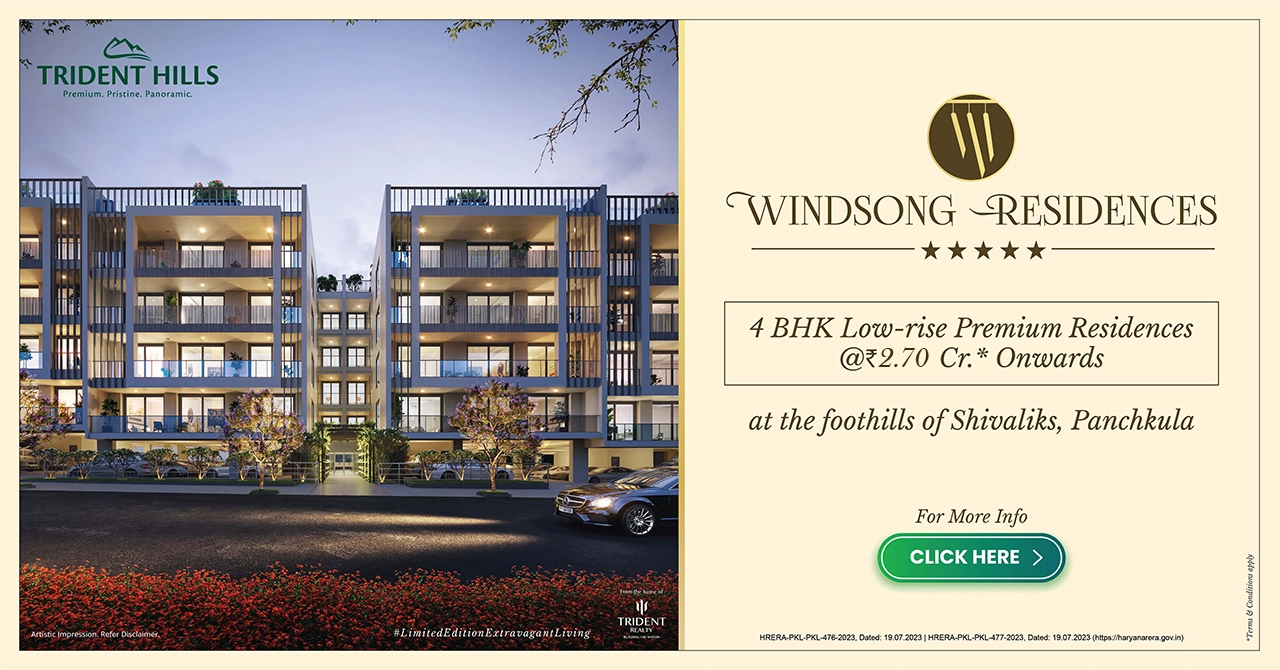
At Trident Hills, we operate under the firm conviction that our strongest marketing asset is our uncompromising track record of delivery. We understand that true brand leadership in the Indian real estate sector is not about telling the most captivating story; it is about building the most resilient, high-performing reality.