








The New Economics of Amenity Planning: What Adds Value and What Is Just Cost
1. More Amenities, Less Value?
Over the past decade, the Indian real estate sector has witnessed an arms race in brochure design. Amenity lists have grown exponentially longer, yet they are not necessarily translating into more useful spaces. Across major micro-markets, it is common to find residential projects boasting thirty or more amenities that ultimately suffer from remarkably low utilisation rates and disproportionately high maintenance costs.
Despite these extensive offerings, many of these highly amenitised projects underperform in the secondary market. Why? Because the prevailing industry logic is fundamentally flawed. Amenities are not mere lifestyle add-ons to be sprinkled across a master plan for aesthetic appeal. They are strict capital allocation decisions. When developers treat them as marketing gimmicks rather than functional infrastructure, the result is inefficiently deployed capital. The future of amenity planning lies not in quantity, but in precision—building spaces that residents genuinely use and value over time.
2. How Amenity Inflation Happened
The phenomenon of amenity inflation is rooted in reactive competitive benchmarking. For years, developers operated on a simple, flawed heuristic: if a competitor offers twenty amenities, we must offer twenty-five. This competition-led approach created a culture of excess across the industry.
Master plans became exercises in copy-paste planning across entirely different projects, irrespective of the micro-market or target demographic. A golf simulator or an open-air amphitheatre was included simply because it looked impressive in sales collateral, not because the buyer demographic demanded it. According to recent ANAROCK insights on shifting amenity demand patterns, the modern homebuyer has become highly discerning, actively rejecting superficial additions in favour of functional utility. Developers who simply added amenities to match competitors—ignoring the friction of actual user needs—created dead zones within their developments. Developers began prioritising brochure appeal over long-term usability.
3. The Economics of Amenities
To understand the true cost of an amenity, one must look beyond the initial capital expenditure (Capex). The economics of amenities must be broken down into three distinct pillars:
Capex Investment: The upfront cost of design, materials, and construction.
Maintenance Cost: The ongoing operational drain on both the developer (pre-handover) and the resident welfare association (post-handover).
Land Allocation Trade-offs: The opportunity cost of the square footage.
Every square foot given to a low-utility feature is a square foot denied to revenue-generating inventory or high-impact infrastructure. Capital tied up in an underutilised facility drags down the overall project yield. McKinsey’s research on construction productivity and capital allocation stresses that inefficiently deployed capital directly impacts project IRR. Every amenity occupies valuable land and capital that could be deployed elsewhere. When viewed through this commercial lens, the question changes from "How much can we fit?" to "What generates the highest return?"
4. What Actually Adds Value
The true drivers of property value are not hyper-niche luxury additions, but high-utility, daily-use infrastructure. Value is created through sustained engagement. When analysing what actually adds value, the focus must shift towards fundamental urban design elements:
Seamless Walkability: Uninterrupted, shaded pedestrian networks.
Green Spaces: Usable lawns and parks, not just visual landscaping.
Mobility Infrastructure: Efficient traffic flow and drop-off management.
Safety and Lighting: Thoughtful, non-intrusive security perimeters.
Everyday Convenience: Integrated, accessible retail for daily necessities.
These elements drive daily engagement, foster community interaction, and inherently boost buyer satisfaction. As highlighted by Knight Frank’s premiumisation insights, true premium real estate is defined by functional luxury and friction-free living. Useful infrastructure helps a project remain desirable and valuable long after launch.
5. Behaviour vs Brochure: The Utilisation Gap
There is a profound disconnect between what looks compelling in a 3D render and how residents actually behave post-handover. This utilisation gap is where capital goes to die. Some amenities look incredibly attractive in brochures but are rarely used, while others are used daily but historically under-marketed.
Consider the classic amphitheatre: it demands significant land and constant upkeep, yet is realistically utilised perhaps three times a year. Contrast this with a well-designed walking track that sees continuous footfall from dawn until dusk. Similarly, grand banquet halls are frequently left empty, acting as spatial liabilities, whereas remote professionals consistently occupy high-speed co-working spaces. Usage determines value. An amenity that does not align with residents' daily routines is not a luxury; it is a liability.
6. Segment-Based Amenity Planning
A one-size-fits-all approach to amenity planning is a hallmark of poor capital allocation. Strategic developers recognise that different buyer segments possess entirely different priorities, necessitating a targeted approach:
Families: Non-negotiables include secure play areas, expansive open spaces, and proximity to transport nodes.
Investors: Prioritise low-maintenance, high-demand features that attract quality tenants without inflating monthly maintenance bills.
Seniors: Require seamless walkability, universally accessible design, and quiet zones separated from active sports areas.
Professionals: Demand integrated workspaces, robust digital connectivity, and late-night convenience retail.
According to JLL’s reports on demographic buyer preference trends, tailoring spaces to specific demographic needs drastically improves absorption rates. Capital must be deployed to serve the micro-market's dominant demographic.
7. Township Strategy: Centralised vs Distributed Amenities
When planning at the township scale, developers face a critical structural decision: should amenities be clustered in a large central clubhouse, or distributed as multiple smaller nodes across the master plan?
A colossal, centralised clubhouse serves as a powerful marketing tool, projecting scale. However, it can create friction regarding accessibility for residents living on the periphery. Conversely, distributed amenities—such as pocket parks and decentralised fitness zones—ensure immediate accessibility for all, driving higher daily utilisation. The layout inherently impacts utilisation. A commercially intelligent approach balances the two: maintaining a centralised hub for major social infrastructure while distributing high-frequency, daily-use amenities throughout the township to ensure equitable access.
8. The Hidden Cost: Maintenance & Sustainability
The true commercial burden of an over-amenitised project is felt long after the developer has exited: the hidden cost of maintenance. High Operations & Maintenance (O&M) costs act as a permanent tax on residents, directly reducing the property's long-term appeal and secondary market value.
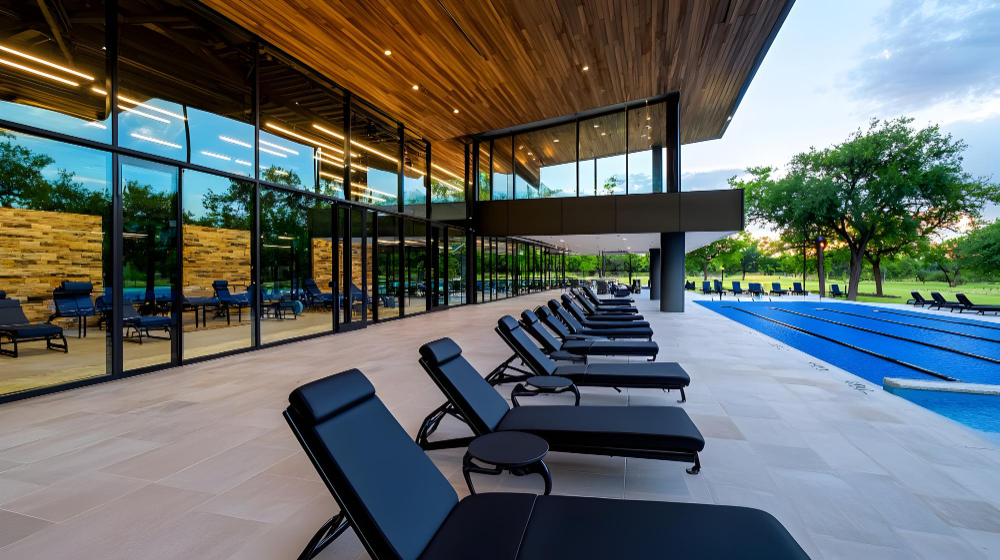
Furthermore, underused amenities deteriorate faster. A neglected squash court quickly transforms from a selling point into an eyesore, dragging down the perceived value of the entire development. Premium positioning is sustained by usability and impeccable upkeep, not by sheer quantity. Developers must calculate the lifecycle cost of every amenity. If a feature is projected to have low utilisation but high maintenance requirements, it must be ruthlessly cut. Long-term sustainability is a financial metric, not just an environmental one.
9. Pricing Power & Absorption
There is a widespread misconception that a longer list of amenities automatically confers pricing power on a developer. In reality, overbuilt and poorly conceptualised amenities do not guarantee premium pricing; they merely inflate project costs and compress developer margins.
Pricing power and absorption velocity are driven by relevance. Relevant amenities that solve genuine lifestyle frictions improve sales velocity because buyers can immediately visualise their utility. When buyers perceive high usefulness, they are willing to pay a premium. If the amenities feel tacked on or mismatched to their lifestyle, the perceived value drops. Capital efficiency dictates that developers build only what buyers are willing to pay for. Buyer perception is driven by usefulness, and usefulness accelerates absorption.
10. The Shift: From Quantity to Precision
The real estate market is undergoing a structural correction. The shift is definitely moving from quantity to precision. Developers who understand ROI are pivoting toward fewer, but significantly better-designed amenities.
This requires behaviour-driven planning—studying how people actually live, work, and interact within a space, and building the infrastructure to support those specific activities. It means prioritising long-term sustainability over short-term marketing wins. By reducing the clutter in underutilised spaces, developers can redirect capital toward higher-quality materials, superior landscaping, and robust core infrastructure, ultimately delivering a far superior, more profitable product.
11. Implications for Plotted Developments
This new economic reality has profound implications for plotted developments. Historically, plotted projects relied on the promise of a massive future clubhouse to drive early sales. Today, intelligent capital allocation means placing much more focus on the immediate landscape and core infrastructure.
There is now less dependency on heavy, capex-intensive clubhouses and more emphasis on open, flexible spaces. Well-laid roads, integrated pedestrian pathways, robust utility networks, and beautifully curated communal green spaces drive far more value for plot buyers than a dormant recreational building. In modern plotted developments, the infrastructure itself becomes the primary amenity.
12. Closing: Value Is Designed, Not Added
The era of amenity inflation is drawing to a close. Amenities do not create value simply by existing on a site plan or in a brochure—they create value strictly by being used. When spaces are highly utilised, they foster community, justify maintenance costs, and drive long-term capital appreciation.
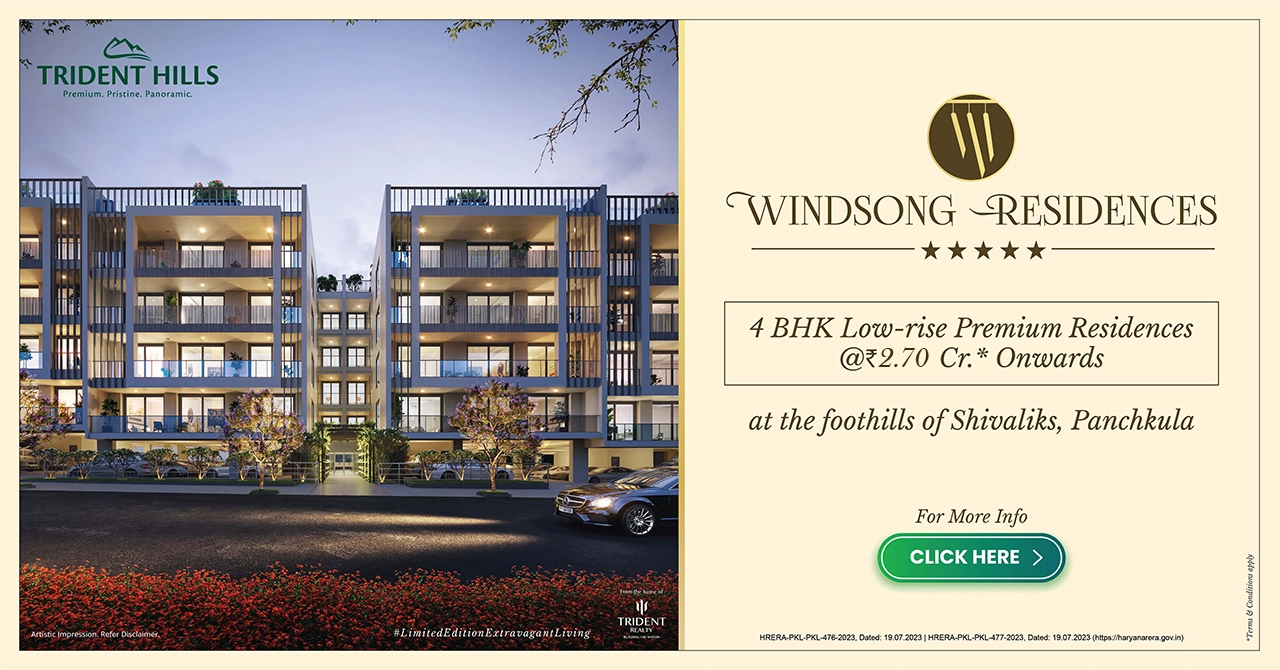
For developers, the mandate is clear: precision beats abundance. By treating amenities as critical capital allocation decisions rather than superficial add-ons, developers can protect their margins while delivering spaces that genuinely resonate with buyers. This planning philosophy is reflected in developments like Trident Hills. Through buyer-aware, design-driven, and disciplined capital allocation, the focus remains on building environments that perform economically and thrive socially. Value is not something you add at the end of a project; it is something you design from the very beginning.