






The Future of Luxury Is Space, Time, and Peace
There was a time when luxury in Indian real estate spoke a remarkably loud language. It announced itself through the cold gleam of imported Italian marble, the weight of double-height crystal chandeliers, and a roll call of European designer fittings. Exclusivity was a visual equation: the more ornamental, dense, and ostentatious the property, the higher its status value. To own a luxury home was to signal material triumph to the outside world.
But walk into the boardrooms of India’s top corporations, the private offices of tech founders, or the clubs frequented by High-Net-Worth Individuals (HNIs) today, and you will find a completely different conversation taking place. Increasingly, affluent buyers are shifting their focus from acquiring more possessions to preserving resources that are becoming scarce—space, time, privacy, and peace of mind.
In a world defined by hyper-connectivity, dense urban crowding, and endless digital noise, the ultimate currency has shifted. True privilege is no longer about material excess. It is about the luxury of space, time, and peace.
1. The Death of Status Signalling: Why the Old Paradigm Failed
Historically, luxury real estate in India operated on a predictable template. Success was equated with density and proximity to the central urban area. Premium addresses in traditional downtown cores meant vertical towers packed tightly together, where grand, gold-leafed entrance lobbies masked the reality of the congestion just outside the gates.
This model of luxury was built on outward status signalling. A home was treated as an exhibition of wealth—a physical collection of premium brands and rare finishes designed to impress visitors. However, as India’s metropolitan centres grew denser, this framework began to crack. High-earning professionals, entrepreneurs, and corporate leaders discovered that while their net worth was rising, their quality of life was steadily declining.
The realisation was simple but profound: you can line your apartment with the finest imported stone, but that marble cannot block the sound of gridlocked traffic outside your window. It cannot purify the air your children breathe, nor can it buy back the two hours you lose every day navigating broken infrastructure.
The traditional definition of luxury provided comfort within the apartment but offered no protection from the chaos outside.
2. The Great Psychological Shift: Wealthy, Yet Time-Poor
A combination of generational change and lifestyle fatigue is driving the shift in buyer psychology. According to the Knight Frank Wealth Report, modern Indian wealth creation is younger, more globally exposed, and increasingly focused on lifestyle quality over traditional asset hoarding. Whether they are tech-entrepreneurs, CXOs, or Non-Resident Indians (NRIs) returning home, this demographic shares a common trait: they have high purchasing power but are deeply starved for time.

A comprehensive wealth study by McKinsey & Company highlights that post-pandemic affluent demographics actively view their homes through a health and wellness lens rather than just a financial or social one. Rising levels of burnout, digital overload, and urban stress have increased the value buyers place on environments that support rest, privacy, and overall well-being. When everything can be ordered at the touch of a button, silence, clean air, and unstructured time become the rarest luxuries of all.
3. Space as the New Luxury: The Freedom of Low Density
In the new luxury vocabulary, spatial freedom has replaced ornamentation. The focus has shifted from how much was spent on the interior to how much breathable space there is around the building.
Post-pandemic market studies by real estate consultancies, including ANAROCK, have highlighted growing demand for larger homes, flexible workspaces, private outdoor areas, and communities that offer greater spatial comfort and lower residential density. Buyers are deliberately moving away from high-density complexes where hundreds of families share a single acre of land. 
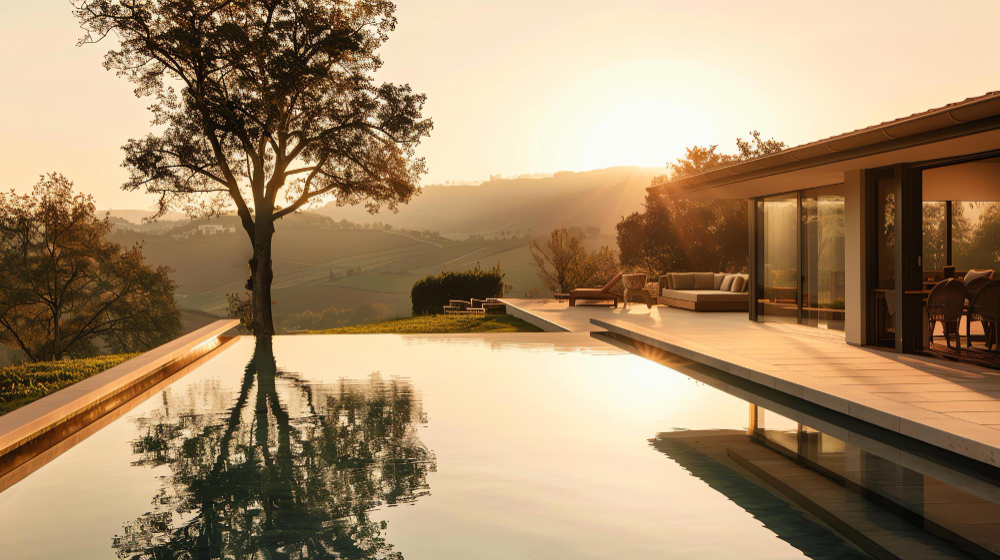
True spatial luxury is visible in communities designed with wide setbacks, generous green buffers, and open horizons. It means living in an ecosystem where your primary view is a mature tree canopy rather than the glass facade of an adjacent high-rise. This deliberate use of space can contribute to a greater sense of privacy, visual openness, and personal comfort—qualities that many buyers increasingly associate with a higher quality of life.
4. Time Is the Ultimate Asset: The Death of the Long Commute
For the modern executive or business owner, a 90-minute daily commute is no longer seen as a standard part of doing business; it is viewed as a failure of lifestyle design. The realisation that time is a non-renewable resource has fundamentally altered where affluent buyers choose to invest in real estate.
This demand for time efficiency has driven the evolution of premium integrated townships and mixed-use luxury developments, as highlighted in regional urban planning studies by the World Bank. Communities inspired by the "15-minute city" planning concept—where daily necessities are within convenient reach—can reduce travel needs and simplify everyday routines.

When high-end grocery markets, premier child care, fitness facilities, and sophisticated dining options are integrated into the immediate neighbourhood, daily errands disappear. Luxury real estate is no longer just selling a beautiful building; it is selling an optimised environment that gives buyers back an hour or two of their day.
5. Peace as a Premium Value: The Power of Silence and Security
The World Health Organisation (WHO) has highlighted the potential health impacts of prolonged exposure to excessive environmental noise, including sleep disturbance, stress, and reduced overall well-being. As urban areas become increasingly busy, many homebuyers are placing greater value on quieter residential environments.

The new luxury developments counter this by prioritising acoustic and visual privacy. This peace of mind is delivered through thoughtful structural design:
Acoustic Insulation: Utilising double-glazed fenestration, thick green perimeter boundaries, and setback master planning to ensure internal ambient noise remains below 45 decibels.
Visual Seclusion: Creating intelligent architectural layouts, private entry points, and recessed balconies that protect residents from being overlooked by neighbours.
6. Wellness-Driven Luxury: Building for Longevity
The conversation around residential amenities has evolved. Buyers are looking past basic gymnasiums and standard swimming pools; they now expect health and wellness features to be deeply integrated into the home's architecture. 
Across the premium housing segment, developers are increasingly exploring design strategies to support healthier, more comfortable living environments.
Environmental Quality: Enhanced air circulation strategies, water management systems, and landscaping approaches designed to support healthier indoor and outdoor environments.
Biophilic Architecture: Designs focused on maximising natural cross-ventilation, optimising daily sunlight exposure, and utilising non-toxic, sustainable building materials.
Dedicated Recovery Infrastructure: Quiet outdoor areas, walking trails, meditation zones, and recreational facilities that encourage regular physical activity and relaxation.
This focus shifts wellness from an occasional activity to a permanent part of the living environment.
7. The Future of Indian Luxury Real Estate: Designing for Outcomes
The Indian luxury housing sector is undergoing a permanent transformation. Many of today's luxury buyers—including business leaders, entrepreneurs, global professionals, and multi-generational families—are increasingly prioritising lifestyle quality, wellness, and long-term comfort alongside traditional markers of success. They have achieved success, and they are now looking inward.
For premium real estate developers, this shift requires a new approach to design. The future belongs to those who understand that emotional outcomes rather than material accents should measure a luxury home. It is not about how grand the lobby looks; it is about how easily you can decompress the moment you drive through the gates.
Ultimately, the future of luxury is not louder—it is calmer. It is defined not by excess, but by ease. True luxury is the quiet confidence of a home that gives you back your time, protects your health, and offers your family a lasting sense of peace.
Verified Source Validations
Knight Frank India: Annual Wealth Reports and analyses on HNI/NRI residential preferences and buying triggers. Knight Frank Research
JLL India: Market intelligence reports on premium luxury real estate and wellness amenity integration trends. JLL India Insights
CBRE India: India Residential Market viewpoints tracking the growth of low-density and ultra-luxury configurations. CBRE India Research
Anarock Property Consultants: Data analytics on post-pandemic demand shifts toward larger ticket sizes and township layouts. Anarock Insights
World Health Organisation (WHO): Environmental health criteria on urban noise pollution limits and clean air metrics. WHO Publications
The World Bank: Urban development frameworks on sustainable urban designs and the economic impact of the 15-minute city model. World Bank Documents
McKinsey & Company: Global consumer insights and premium demographic health/wellness orientation research. McKinsey Insights