







Why Convenience Has Become the New Definition of Luxury
Once upon a time, luxury was measured by what a home contained.
A grand marble foyer, an elaborate imported chandelier, gold-leaf accents, and a sprawling clubhouse were the undisputed signatures of prestige. To own a luxury residence was to showcase physical opulence—a static display of wealth designed to impress visitors and signal social standing.
Today, however, a quiet revolution is underway across India’s premium real estate landscape. The definition of high-end living is undergoing a fundamental re-evaluation. A new generation of affluent homebuyers is asking a strikingly different question before acquiring a property. They no longer ask: "How many decorative amenities does this building offer?"
Instead, they ask: "How much time will this home give back to me?"
That single shift is redefining premium residential real estate. In rapidly accelerating Indian metros, where traffic congestion, extended work hours, and administrative friction chip away at daily personal life, true luxury is no longer about decorative excess. It is about eliminating friction. Luxury is shifting from display to experience—and convenience has become its ultimate measure.
1. The Changing Anatomy of Luxury
For decades, the luxury property market operated on a principle of accumulation. Developers competed by adding surface-level features: temperature-controlled pools, multi-tier security gates, designer lobbies, and private screening rooms. While these features offered undeniable visual appeal, many ultimately functioned as static backdrops—rarely used, yet costly to maintain.
Contemporary buyers, particularly accomplished professionals, entrepreneurs, and global executives, view their living spaces through an operational lens. They recognise that an opulent penthouse situated in an inaccessible, traffic-choked corridor does not elevate their daily life; it complicates it.

As research from real estate consultancy Anarock highlights, the demand for premium and luxury housing in India has expanded rapidly, yet buyer expectations within this segment have matured significantly. Wealthy consumers are increasingly prioritising functional elegance, master-planned connectivity, and time efficiency over mere physical scale.
The absence of daily aggravation defines modern luxury:
It is the ability to walk to a grocery store or cafe without crossing chaotic arterial roads.
It is the assurance that electricity, water, and high-speed data flow uninterrupted without manual intervention.
It is the luxury of spending an extra hour with family each evening because your home is integrated into a multi-modal transport and social grid.
2. Time Has Become the Ultimate Scarcest Asset
To understand why convenience has overtaken decoration in the luxury hierarchy, one must examine the socio-economic reality of modern urban professionals.
Corporate leaders and business owners operate under intense time constraints. The rise of hybrid work models, global cross-border operations, and expanding family commitments has compressed personal leisure hours. In major Indian economic hubs, commuting remains one of the largest drains on human productivity and personal well-being.
Data from the World Bank indicates that urban travel delays in expanding metropolitan regions cost local economies billions in lost productivity annually, while compounding physiological stress for daily commuters. When an executive spends ninety minutes each way navigating urban gridlock, the physical grandeur of their home offers little consolation upon arrival.
Reclaiming time has become the highest form of personal empowerment. A residence that saves thirty minutes of travel time every morning through strategic positioning, dedicated infrastructure, or integrated retail effectively gifts its occupant several hours of personal freedom every week. In a world characterised by time poverty, a home that creates time is inherently more valuable than one that merely showcases wealth.
3. Walkability as a Premium Amenity
In classical Indian urban development, car-centric design dominated. Gated communities were constructed as isolated fortresses, requiring residents to drive onto congested public roads for basic errands.
Today, human-scale planning and pedestrian freedom have emerged as hallmarks of elite housing. Walkability—the ability to satisfy daily needs safely and comfortably on foot—is increasingly recognised as a premium residential feature.
Research published by Knight Frank on urban walkability and liveability frameworks emphasises that mixed-use, highly walkable micro-markets achieve distinct valuation premiums over car-dependent suburban enclaves. When residents can navigate their immediate surroundings on foot, several lifestyle advantages converge:
Active Mobility: Dedicated, grade-separated pedestrian walkways and cycling tracks promote spontaneous physical activity, turning basic mobility into a healthy daily habit.
Child and Senior Safety: Vehicle-segregated internal streets allow children to play and senior citizens to walk without exposure to vehicular traffic.
Community Cohesion: Walkable environments foster casual, face-to-face interactions among neighbours, rebuilding the social fabric that isolated apartment towers often dismantle.

The World Health Organisation (WHO) emphasises in its urban health guidelines that environments supporting active transport and pedestrian movement significantly lower risks of chronic lifestyle illnesses while enhancing mental wellbeing. Walkability is no longer a simple municipal preference; it is a vital healthcare amenity built into high-end real estate.
4. Proximity to Essentials: The Frictionless Ecosystem
Convenience is not achieved by placing a single retail shop inside a residential compound. It requires an integrated ecosystem where education, healthcare, commerce, and leisure operate within a unified radius.
When evaluating premium properties, buyers are scrutinising the surrounding social and commercial infrastructure. According to market analyses by CBRE India, high-net-worth individuals are prioritising developments situated near reputable international schools, multi-speciality healthcare centres, high-street retail promenades, and curated dining districts.

The benefits of an integrated ecosystem are immediate:
Elimination of Micro-Journeys: Daily errands—such as picking up fresh produce, dropping children at school, or visiting a pharmacy—no longer require driving or parking, eliminating micro-stresses.
Flexible Work-Life Integration: Nearby co-working lounges, business centres, and quiet cafes allow hybrid professionals to step away from their home desks without commuting to distant office districts.
Enhanced Tenant and Resale Liquidity: Properties situated within complete social ecosystems experience consistent rental demand and lower vacancy rates, making them durable investment assets.
By embedding daily necessities into the neighbourhood, developers convert physical proximity into effortless living.
5. Invisible Infrastructure: The True Luxury Foundation
While manicured lawns and grand entry gates are easily visible, the true quality of a luxury property lies in its invisible infrastructure. Superficial features lose their charm if basic municipal services fail.
Reports by the Ministry of Housing and Urban Affairs (MoHUA) and policy frameworks from NITI Aayog repeatedly highlight that sustainable urban liveability depends on robust utility management. A luxury home must function as an island of total reliability regardless of external municipal strain.

True convenience depends on these essential systems working seamlessly in the background:
Uninterrupted Utilities: Dual-source water treatment facilities, rainwater harvesting networks, and 100% power backup systems guarantee that daily household functions continue without interruption.
Advanced Civil Engineering: Underground drainage systems, integrated waste management, and heavy-duty stormwater channels protect the community from seasonal urban flooding, safeguarding both physical structures and peace of mind.
Digital Infrastructure: High-capacity fibre-optic backbones, multi-operator telecom coverage, and smart home automation interfaces ensure that remote work, entertainment, and home security function flawlessly.
As JLL India noted in its residential market studies, modern home purchasers are increasingly conducting technical due diligence on utility redundancies and developer execution capability. Systems that work consistently without requiring owner intervention are the ultimate form of invisible luxury.
6. How Convenience Drives Mental Wellbeing
The move toward convenience-driven housing is not merely a matter of practical utility; it is deeply connected to psychological well-being and physical health.
Urban living in expanding cities introduces constant cognitive load: navigating traffic, managing scheduling conflicts, dealing with service disruptions, and negotiating crowded spaces. Over time, these daily micro-stressors contribute to elevated cortisol levels, chronic fatigue, and reduced life satisfaction.
Urban health research emphasises that environmental design directly influences human stress responses. When a residential master plan simplifies daily routines, the psychological benefits are significant:
Cognitive Relief: When daily tasks require minimal planning or travel, mental energy is freed up for creative work, personal relationships, and rest.
Predictable Routines: Reliable infrastructure and proximity to essentials remove uncertainty from daily schedules, lowering chronic anxiety.
Quality Family Time: Time previously lost to traffic jams is converted into meaningful personal hours—enabling shared family meals, unhurried morning routines, and consistent exercise habits.
By addressing the root causes of daily friction, a convenience-focused home becomes a true sanctuary—a space that actively restores human energy rather than depleting it.
7. Integrated Townships as Convenience Engines
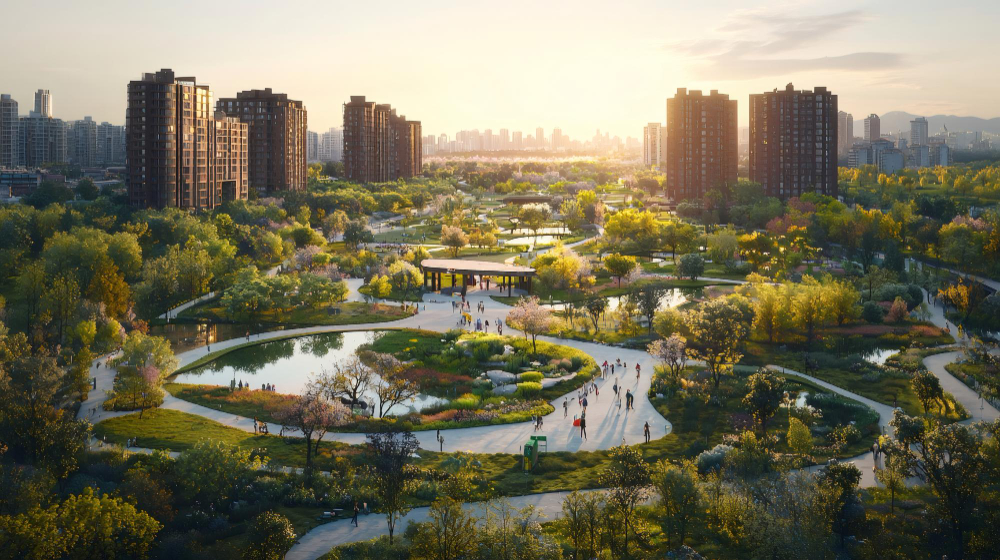
The desire for walkability, time-efficiency, robust utilities, and comprehensive social amenities comes together most effectively in integrated master-planned townships.
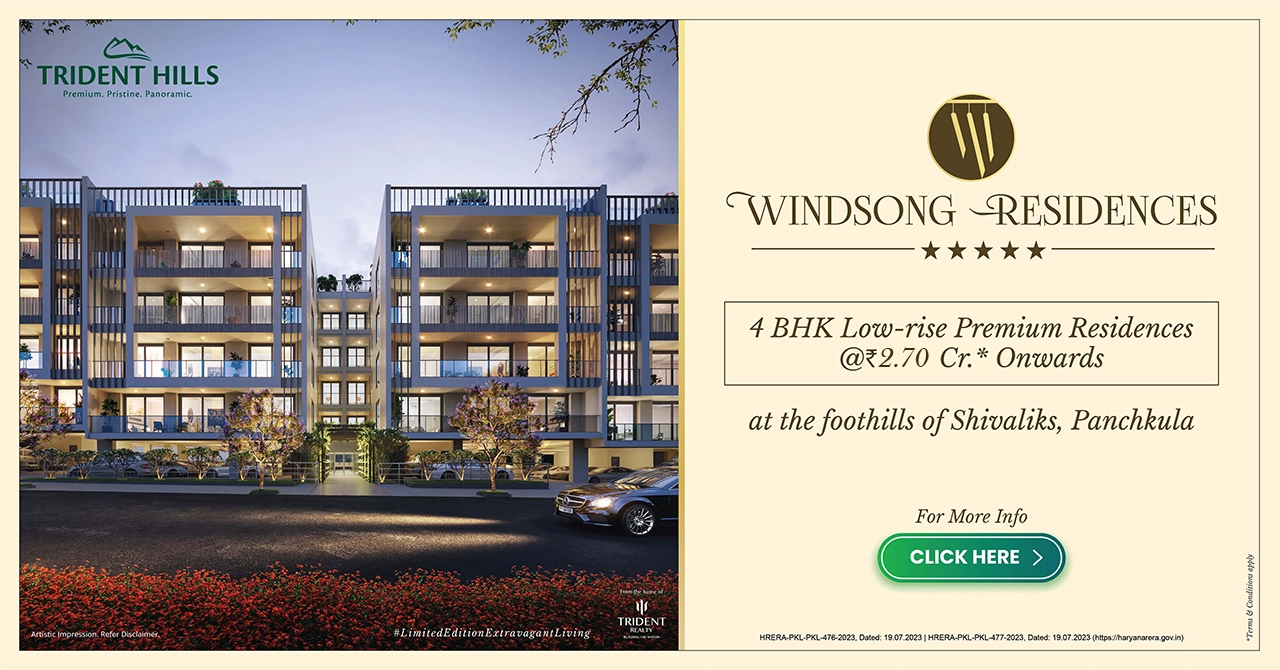
Unlike standalone residential towers, which rely entirely on external municipal networks, master-planned developments function as self-sustaining urban ecosystems. Projects like Trident Hills and Trident Parktown illustrate how large-scale, low-density master planning can integrate natural surroundings with modern convenience.

Master-planned townships deliver tangible convenience through several core principles:
Master-Planned Circulation
Developments such as Trident Hills and Trident Parktown use hierarchical road networks that separate heavy vehicular traffic from internal pedestrian zones. Residents can enjoy wide green corridors, dedicated running paths, and open spaces without encountering suburban congestion.
Embedded Civic and Lifestyle Infrastructure
By integrating daily retail, leisure spaces, sports facilities, and healthcare access directly into the master plan, these townships eliminate unnecessary outside trips. Essential services remain accessible within minutes, creating a seamless 15-minute neighbourhood experience.
Long-Term Value Protection
Developments built on holistic master-planning principles preserve their functional efficiency as surrounding cities expand. Piped utilities, organised parking, and professional community management protect the development from physical decay, ensuring long-term asset value and superior liveability.
8. Conclusion: The Future Belongs to Effortless Living
The evolution of luxury real estate reflects a deeper shift in consumer values. As Indian cities grow denser and daily life becomes more demanding, true luxury is no longer defined by grand displays or ornamental excess.
The next generation of premium homes will not win buyers over with bigger chandeliers, lavish marble entrances, or an endless list of unused amenities. They will win by offering something far rarer and infinitely more precious in modern urban life:
More time.
Less friction.
Greater peace of mind.
A home's true value is no longer measured solely by what sits within its walls. It is measured by how effortlessly it fits into everyday life, how effectively it reduces stress, and how much time it returns to those who live there. In a fast-moving world, that is the ultimate luxury.
External Verified Sources & Further Reading
Anarock Property Consultants: Indian Residential Real Estate Annual Market Reports & Luxury Housing Trends. anarock.com
Knight Frank India: Research on Urban Liveability, Walkability Frameworks, and Premium Real Estate Valuation. knightfrank.co.in
CBRE India: India Residential Outlook & High-Net-Worth Buyer Preference Studies. cbre.co.in
JLL India: Residential Market Insights, Infrastructure Impact, and Urban Convenience Analytics. jll.co.in
World Health Organisation (WHO): Urban Health, Physical Activity, and Healthy Environment Guidelines. who.int
World Bank Group: Urban Development, Productivity, and Liveable Cities Research. worldbank.org
Ministry of Housing and Urban Affairs (MoHUA), Government of India: Liveability Standards and Sustainable Urban Planning Guidelines. mohua.gov.in
NITI Aayog, Government of India: Policy Papers on Urban Reforms, Sustainable Cities, and Infrastructure Planning. niti.gov.in