









Why India’s Future Cities Will Be Built Around Integrated Ecosystems
A neighbourhood can contain everything on a planner’s checklist and still make everyday life unnecessarily difficult. Homes stand beside a park, but the entrance faces away from them. Shops are nearby, but reaching them means crossing a fast-moving road. A transport station serves the area, yet the final journey requires a car. In heavy rain, the landscaped centre remains attractive, but the approach road becomes hard to use.
The problem is not always a missing component. Often, it is the relationship between components.
This is the central argument for integrated urban ecosystems. Homes, nature, mobility, infrastructure and community spaces need to be designed as parts of the same environment. Their value depends on how they support one another, not simply on whether each appears in a development plan.
For India’s future cities, that distinction matters enormously. Building more housing is necessary. Building neighbourhoods in which housing connects sensibly with the rest of life is the larger task.
India has an opportunity to shape growth before it hardens
Urban development creates arrangements that can persist for generations. Once buildings, roads and service corridors occupy the land, correcting their relationships becomes expensive and disruptive. A disconnected path can sometimes be repaired; a neighbourhood built without room for drainage, public transport or accessible open space is harder to resolve.
A 2025 World Bank report on resilient urban development in India projects an urban population of 951 million by 2050. It also estimates that more than half of the urban infrastructure required for that year remains to be built.
These projections describe both an opportunity and a challenge. India can coordinate future growth before fragmented decisions become permanent. Successive rounds need to consider housing capacity, transport access, water systems, and landscape, rather than each attempting to accommodate what the previous one has already fixed.
An ecosystem approach brings those decisions into the same conversation. It asks what a growing neighbourhood needs to function, rather than treating residential construction as the first step and everything else as a later correction.
Integration is a relationship, not a project size.
The term “integrated ecosystem” can sound like a new name for a large township. Scale can help: a larger site may provide greater scope to coordinate roads, landscapes, shared services and different uses. But acreage alone does not produce integration.
A compact urban neighbourhood can integrate well if homes connect with useful public spaces, everyday services, and transport. A much larger development can remain fragmented if difficult routes separate these elements or if they are delivered without regard for one another.
The practical test is continuity. Can residents move between activities without encountering avoidable breaks? Do common services support the population they are intended to serve? Does the landscape respond to local conditions? Are commercial and recreational uses accessible without overwhelming quieter residential areas?
This distinction also prevents a misleading promise of total self-sufficiency. No residential development can contain every workplace, specialist hospital, educational choice or cultural opportunity a household may need. A strong ecosystem supports local life while maintaining useful connections to the wider city.
Homes and mobility must be planned together.
People often describe residential location by distance from major destinations. But the lived experience of that location depends on routes, available transport, and how easy it is to switch between modes.
A station nearby is valuable only if people can reach it conveniently. Walking to a bus stop requires a usable path and a manageable crossing. Shared transport needs sensible pickup space. Within a neighbourhood, vehicle access must coexist with children walking, older residents moving slowly and people carrying shopping.
India’s National Transit Oriented Development Policy emphasises integrating land-use and transport planning to support walkable neighbourhoods, mixed-use development and access to public spaces. The underlying principle is coordination: homes, everyday destinations and transport connections should work together rather than as separate elements.
This does not eliminate cars or guarantee shorter commutes. It creates the option to choose how to travel. When every task requires driving, the road network carries journeys that people might otherwise make on foot, by cycle, or by public transport.
An integrated neighbourhood also needs connections beyond its perimeter. Comfortable internal paths cannot compensate for an unsafe external approach. Regional connectivity and local access should be assessed separately, then brought together in the residential brief.
Nature needs a place in the infrastructure plan
Urban landscape is frequently considered after roads and buildings have claimed their space. The remaining land is then made green. An ecosystem approach reverses that sequence by asking what the site’s landscape needs to do before fixing its edges.
Trees require enough soil and room to mature. Walking routes need shade where people actually travel. Rainfall needs a considered path through collection, infiltration, storage, or discharge, based on site conditions and engineering requirements. These decisions influence building and service locations, as well as the landscape itself.
A garden can look appealing without addressing any of these needs. Equally, a planted drainage edge can serve a practical purpose without being comfortable or accessible for residents. Good planning considers performance and use together.
Nature should not be presented as a universal remedy. Planting does not replace pollution control, drainage engineering or effective building design. Its contribution depends on species, location, water availability and maintenance. A coherent landscape strategy recognises these limits while giving greenery a purposeful role across the neighbourhood.
Community spaces work through their surroundings
A community centre does not create a community simply by opening its doors. Residents need reasons to visit, comfortable ways to arrive and different levels of participation.
Some social life is organised: a class, a celebration or a residents’ meeting. Much of it is incidental. People recognise one another along a familiar walking route, pause near a play area or exchange a few words while completing an errand.
The placement of shared spaces influences those encounters. A shaded seat along a useful route may support more everyday interaction than a grand plaza detached from normal movement. A gathering space needs appropriate servicing and noise management to remain a welcome neighbour.
Integration therefore involves judgement about proximity. Activities should be close enough to be useful, but arranged carefully enough to protect privacy and rest. A neighbourhood becomes socially richer when it offers choice, including the choice to remain quiet, rather than expecting everyone to participate in the same way.
Shared systems need long-term stewardship.
An ecosystem is sustained through operation, not completed by construction. Water systems need attention, streets need repair and planting needs care. The organisations responsible for these tasks must understand where their duties begin and end.
This becomes especially important where private development meets public infrastructure. Internal drainage depends on an appropriate outlet. A transport connection depends on services outside the developer’s control. Waste collection requires arrangements beyond providing bins.
Clear responsibilities matter more than claims of comprehensiveness. Buyers should be able to distinguish developer-managed systems, municipal services and facilities operated by third parties. Funding and maintenance arrangements need to be realistic for the community that will eventually occupy the development.
Technology can help with monitoring or coordination, but it cannot replace accountable management. A dashboard may identify a problem; someone still needs the resources and authority to resolve it.
A complete master plan is not the same as a complete neighbourhood
Large developments often emerge in phases. Early residents may occupy homes before retail areas, landscape networks or shared facilities are ready. That transition deserves as much attention as the finished vision.
Each inhabited phase needs workable access, essential services and clear separation from construction activity. Temporary arrangements should be practical, not something residents must endure while the eventual plan supposedly resolves them.
For buyers, the important distinction is between what exists, what is committed for their phase and what belongs to a longer-term proposal. A future ecosystem is credible when its stages support ordinary life along the way.
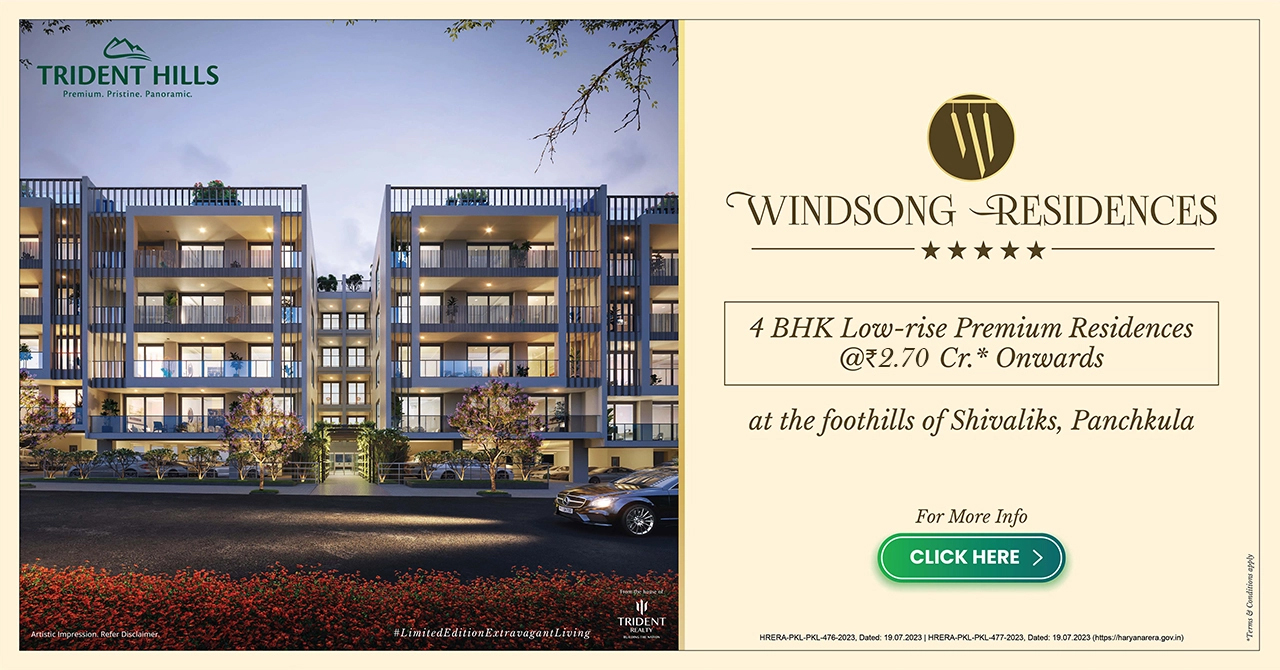
For Trident Realty, integrated planning offers a framework for considering infrastructure, sustainability and well-being as connected parts of residential development. The objective is to bring these priorities together through reliable services, purposeful landscapes and shared spaces designed around everyday needs.
Better neighbourhoods must also make better city connections
India’s urban future will include established districts, new extensions, redevelopment and planned residential communities. There is no single development format capable of meeting every need.
The ecosystem principle can inform each. It encourages planners to examine connections between land uses, nature and infrastructure, and individual neighbourhoods and the cities around them. Its success depends on coordination across public agencies, developers, designers and those who maintain places after occupation.
Cities will not improve simply by accumulating developments that work well within their own boundaries. Their roads, drainage, transport and public spaces also need to function as shared networks.
The enduring promise of integrated ecosystems is therefore a better way to join things up. Homes belong within neighbourhoods; neighbourhoods belong within cities. When those relationships are planned carefully, urban growth can create places that are easier to inhabit, maintain and adapt—not simply more places to build.
Explore Trident Realty’s residential developments to understand how thoughtful planning can bring homes, infrastructure, landscape and community spaces together to support everyday living.