





The Relationship Between Public Spaces and Quality of Life
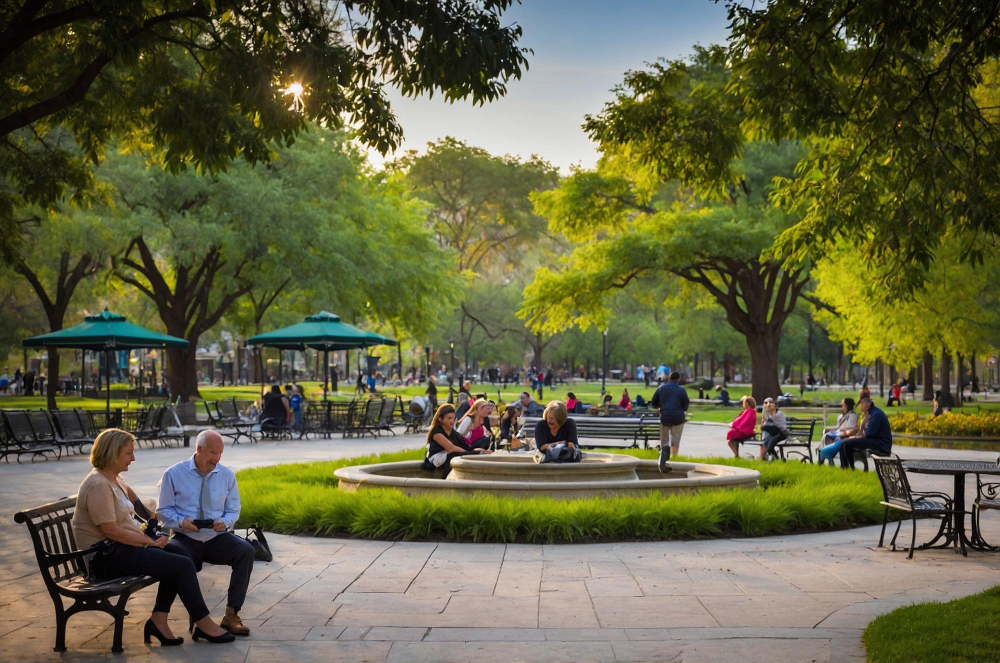
At around six in the evening, a small residential courtyard begins to change character. Children trace circles around a planter on their bicycles. Two older residents take the shaded bench they use most days. A parent waiting nearby recognises another from the school bus stop, and a brief exchange turns into a conversation. None of this appears on an amenity schedule. No event has been organised.
Yet this ordinary half-hour reveals something important about residential quality of life. People do not develop a sense of community because a brochure promises one. They develop it through repeated, low-pressure encounters in places that make pausing comfortable and participation optional.
This is the deeper value of public and shared spaces in residential developments. A park, plaza, walking route or community room is not successful simply because it occupies land. Its contribution depends on where it is located, how it feels at different times of day, who can reach it and whether residents can use it without purchasing, booking or joining a formal activity. Thoughtful social space turns proximity into familiarity. Over time, familiarity can become trust, mutual support and attachment to place.
Open-Space Quantity Is Only the Starting Point
Area statements are easy to compare. One development offers a large central green; another advertises a particular percentage of landscaped space. These figures say little about whether the space will become part of daily life.
A lawn at the far edge of a community may look generous from above but remain inconvenient. A plaza exposed to afternoon heat may empty when families are free to use it. Meanwhile, a modest play space along a regular walking route can become naturally integrated into the day.
The Ministry of Housing and Urban Affairs’ Liveability Standards in Cities recognises both green space and public and recreational space as indicators of urban liveability. The distinction matters. Greenery contributes environmental value, but a socially useful place also requires access, activity and human comfort.
For residential planners, the question is how open space is distributed. Pocket parks, shaded stopping points and a larger gathering ground can perform different roles, creating choices instead of asking one ceremonial park to accommodate every age group and mood.
Social Connection Grows Through Repetition
Most neighbourly relationships do not begin at community festivals. They begin with recognition: seeing the same person walking a dog, waiting with a child or reading on a bench. Sociologists sometimes describe such relationships as “weak ties”. The term can sound dismissive, but these familiar acquaintances form an important layer between private family life and complete anonymity.
Well-placed public spaces increase the probability of these encounters without forcing intimacy. A resident can join a conversation or simply sit nearby. Children often make the first connection, with adults gradually building familiarity around their play. Older residents gain a way to remain present in community life even when they are not participating in strenuous activity.
The World Health Organization’s review of urban green-space interventions found that improved green spaces can produce positive health, social and environmental outcomes. It also noted that physical improvements work best when combined with community engagement and opportunities that attract different groups. Design creates the invitation; patterns of use give the place social meaning.
This is why circulation matters. Routes should cross naturally at useful destinations rather than manufacturing interaction in isolated “social zones”. A bench outside a convenience store, seating near a play area or a shaded ledge beside a walking path may support more consistent contact than an ornate pavilion used only on special occasions.
The Edge Often Matters More Than the Centre
People rarely occupy open space evenly. They tend to gather at its edges—under a tree, beside a low wall, near a café frontage or where they can watch activity without standing in its path. Successful spaces account for this behaviour.
Seating should offer options. Some benches can support conversation; others should face a view or activity. Seat walls and broad steps accommodate informal use, while back support, armrests and suitable heights make a material difference to older residents. Nearby shade extends how long everyone can stay outside.
The relationship between active and passive uses also needs care. A basketball court can animate an area but create noise conflict beside homes. A children’s zone benefits from adult seating and clear sightlines, but it should not dominate every quiet garden. Spaces for energetic play, solitary reading, conversation and community gatherings need both connection and a degree of separation.
This layered approach gives residents agency. Quality of life improves when people can choose how social they wish to be instead of finding that every shared area is either crowded and programmed or empty and decorative.
Climate Comfort Determines Whether Design Gets Used
In much of urban India, outdoor-space design succeeds or fails in response to sun, heat, dust and seasonal rain. A visually striking plaza with little shade may offer only a narrow window of comfort. By contrast, a modest court with mature trees, air movement and protection from traffic can support use across more hours of the day.
Plan shade as a spatial system. Tree canopies take time to develop and require adequate soil volume; pergolas and arcades can provide earlier protection. Drinking water, accessible toilets and sheltered areas extend the usefulness of larger spaces. Permeable surfaces and effective drainage help keep a park or path usable after heavy rain.
The WHO’s evidence review on urban green spaces and health identifies several pathways through which greenery can support well-being, including relaxation, physical activity, social cohesion and reduced exposure to excessive heat and noise. These benefits are not automatic. They depend on whether the landscape is accessible, comfortable and maintained well enough to be used.
For developers, this means moving beyond photogenic planting. Species selection, shade performance, irrigation demand, visibility and long-term maintenance determine whether a landscape matures into social infrastructure or gradually loses its appeal.
Inclusive Space Serves More Than One Ideal Resident
Public space reveals whom a community includes. A sunken lawn reached only by steps immediately excludes some residents. A walking loop without resting places limits older adults, while a playground serving one age group can leave siblings and caregivers with little to do.
Inclusive planning begins with step-free access, safe gradients, non-slip surfaces and clear wayfinding. It must also recognise different social needs: quieter corners, places for teenagers to gather, and dignified routes and waiting areas used by staff and visitors.
Safety should come from more than gates and cameras. Clear sightlines, active edges, appropriate lighting and a steady presence of different users create informal supervision. Overly controlled spaces can discourage the very activity that makes a place feel secure, while hidden or poorly connected areas may remain uncomfortable despite extensive surveillance.
UN-Habitat’s 2025 publication on healthier cities and communities through public spaces links thoughtfully designed and maintained public areas with physical activity, mental well-being, social cohesion and community engagement. Its emphasis on maintenance is crucial: inclusion is an operating commitment, not a feature completed at handover.
Management Turns Space into Place
Even excellent design cannot anticipate every use pattern. Residents may reveal that a morning walking group needs another resting point, that children gather in an unintended but convenient corner, or that a lawn is too precious to support informal play. Responsive management treats these behaviours as information rather than rule-breaking by default.
Small adjustments—relocating seating, improving lighting, permitting a weekend activity or changing maintenance timings—can transform use without major construction. Resident committees and periodic feedback help management distinguish genuine conflicts from assumptions. Formal programming has a role, but a healthy public realm should not depend on constant events to feel alive.
Maintenance quality also directly shapes resident satisfaction. Broken play equipment, poorly drained paths and neglected planting communicate that shared life is a secondary concern. Clean, functioning and cared-for spaces signal a continuing commitment to the community after the initial sale.
Public Space Is Part of the Residential Product
Homebuyers often devote most of a site visit to the sample residence. Yet the spaces between the front door and development gate may influence daily satisfaction just as consistently. Buyers should trace the walk to parks and conveniences, and observe whether different generations can use the routes independently.
Practical questions also matter. Who manages the landscape? Are shared spaces free to use or booking-based? How are noisy and quiet activities separated? The answers reveal whether social life has been treated as a genuine planning outcome.
This understanding complements Trident Realty’s focus on creating residential ecosystems. When customer-centricity and well-being guide development, the shared realm cannot be treated as leftover land around buildings. It becomes part of the residential product: a setting where private life remains protected, but connection is always within reach.
Quality public space does not manufacture friendship or guarantee harmony. What it can do is remove the spatial barriers that keep neighbours apart. It provides comfortable reasons to step outside, stay a little longer and recognise the people who share the same address.
That quiet accumulation of encounters is how a collection of homes begins to function as a community—and how thoughtfully designed space becomes an enduring part of resident satisfaction.
Explore how Trident Realty approaches residential development through customer-centricity, sustainability, well-being and the creation of communities designed for everyday life.