









Designing Homes for Measurable Health — IAQ, Ventilation & Biometric-Ready Spaces
Step into the average luxury apartment in Mumbai or Gurugram, and the first thing you notice is the finish—the Italian marble, the floor-to-ceiling glazing, the smart lighting. But take a deeper breath. What you are inhaling might be the silent crisis of modern Indian living.
In a city like Delhi, where the outdoor Air Quality Index (AQI) frequently breaches the ‘severe’ mark, our homes often trap pollutants we can’t see — and that’s where the real wellness challenge lies. We seal them shut to keep the pollution out, only to trap CO₂, Volatile Organic Compounds (VOCs), and particulate matter inside. We spend 90% of our time indoors, yet we measure our health by the 45 minutes we spend in the gym.
The next frontier of Indian real estate is not about visible opulence; it is about measurable health. It is about homes that act as a biological shield—spaces that actively monitor, filter, and optimise the air you breathe and the environment you sleep in. This is the era of the biometric-ready home.
Why indoor air quality (IAQ) now matters
Indoor air quality (IAQ) simply describes how clean or polluted the air is inside a building, typically looking at particles like PM2.5, gases such as carbon dioxide and volatile organic compounds (VOCs), plus basic comfort metrics like humidity and temperature. The World Health Organization’s latest guidelines peg the safe annual average for PM2.5 at 5 micrograms per cubic metre, yet India’s national average in 2022 was estimated at around 53 micrograms per cubic metre, with Delhi’s levels close to ten times the recommended limit, making “air you can measure” a genuine luxury feature rather than a soft talking point.
For Indian homebuyers who already spend most of their day indoors – whether in high-rise apartments, plotted townships or compact city homes – the evidence that long-term exposure to poor IAQ contributes to respiratory disease, heart problems and reduced cognitive performance is turning “healthy homes” into a rational investment decision rather than a lifestyle fad. Early studies focused specifically on Indian households suggest that indoor air can be two to five times more polluted than outdoor air, especially in homes close to construction, using incense, or relying on solid or biomass fuels in peripheral markets, which makes IAQ design even more critical in our context
What to measure inside a home
A health-focused home in India should, at minimum, track fine particulate matter (PM2.5 and PM10), carbon dioxide levels, total VOCs, relative humidity and temperature; together, these parameters indicate whether a room feels fresh, well-oxygenated and free from harmful chemical build-up. The WHO’s PM2.5 guideline of 5 micrograms per cubic metre (annual) and 15 micrograms per cubic metre (24‑hour) is a useful benchmark for premium projects promising “clean air” as part of their positioning, particularly when outdoor levels in many Indian cities breach these thresholds on a majority of days in winter.
Nationally, the updated National Building Code (NBC 2016) and related guidance from Indian consultants now treat outdoor air ventilation rates and IAQ as core design parameters, rather than afterthoughts, setting minimum fresh-air rates per person and recommending that designers consider pollutant build-up, not just cooling loads. On the health-tech side, India’s home healthcare monitoring devices market – covering blood pressure machines, glucose meters, pulse oximeters and wearables – crossed roughly USD 750 million in 2024 and is projected to grow at over 16 per cent annually through the next decade, driven by chronic disease, ageing parents and the rise of telemedicine.
Parallel forecasts for smart homes show India’s overall smart home market heading towards tens of billions of dollars by 2030, with health monitoring and assisted living identified as one of the fastest-growing application segments, powered by fall-detection, remote vital tracking and integration with digital health services.
Design and architectural strategies to improve IAQ
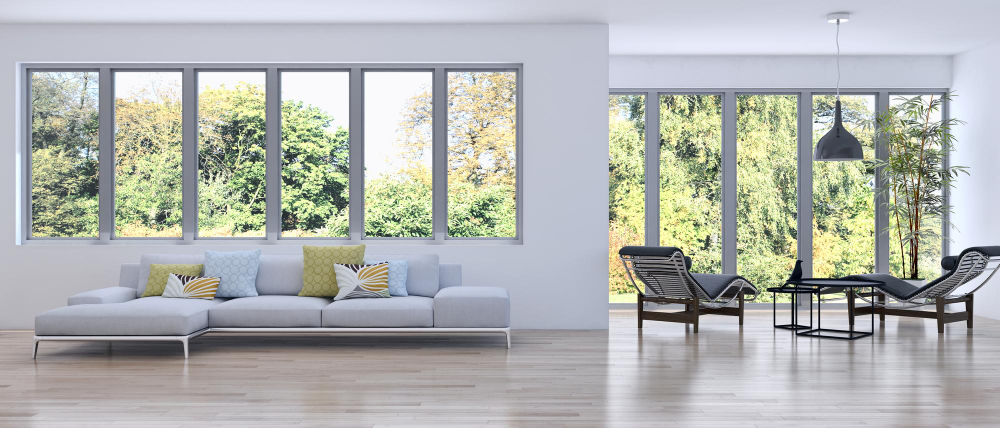
From an architectural point of view, the healthiest Indian homes will be the ones that treat ventilation, orientation and shading as seriously as carpet area. Cross-ventilation through windows on opposite or adjacent façades, shaded balconies that can safely stay open in monsoon, and stack-effect shafts that naturally draw hot air upwards all reduce reliance on mechanical cooling and support dilution of indoor pollutants, an approach echoed in Indian research and policy discussions on ventilation during and after the COVID‑19 pandemic.
Building on the National Building Code’s baseline, the Council of Scientific and Industrial Research (CSIR) issued enhanced ventilation guidelines recommending fresh-air rates equivalent to around 10 litres per second per person and a minimum of about five air changes per hour in COVID-like scenarios, with even higher rates suggested in heavy-smoke or high-pollution zones. Inside the unit, low‑VOC materials quietly do the heavy lifting for IAQ, especially in compact Indian layouts where off‑gassing can concentrate quickly. The Bureau of Indian Standards’ IS 15489:2013 standard for plastic emulsion paints, along with its proposed revisions, sets limits on VOC content and hazardous substances; meanwhile, voluntary frameworks such as CII’s GreenPro certification and Indian Green Building Council ratings explicitly reward the use of low‑VOC paints, sealants and adhesives, nudging serious developers away from cheap, high‑emission finishes.
Layered on top of this, properly designed mechanical systems – balanced fresh‑air systems with filters sized for Indian pollution loads, room-level HEPA purifiers in northern markets and exhaust fans in kitchens and toilets ducted to the outside – turn “ventilation” into a measurable performance, especially when tied to sensors that trigger higher airflow when PM2.5 or CO2 spikes
Mechanical Systems That Actually Deliver Clean Air
Where passive design cannot fully protect occupants — for example, during winter pollution spikes or in tightly sealed buildings — mechanical systems must take over, intelligently and efficiently.
For dense Indian cities with high outdoor pollution, “just open the window” is no longer a sufficient ventilation strategy, particularly in winter smog or near busy roads. CSIR’s guidelines explicitly encourage a mix of natural and mechanical ventilation, including window design optimised for breezes when outdoor conditions are acceptable, plus filtered mechanical supply air during extreme pollution episodes – an approach increasingly visible in green-certified residential towers and premium office conversions.
Modern smart home ecosystems in India are rapidly catching up, with market analyses projecting the broader smart home segment to grow at around 30 per cent annually this decade; security still dominates, but integrated IAQ sensors, smart thermostats and app‑linked purifiers are becoming standard in higher-end packages.
For a developer, this creates an opportunity to offer “health dashboards” as part of the handover – in-built monitors that display PM2.5, CO2, humidity and filter status in real time on a wall panel or resident app, backed by system design that can actually bring those numbers within globally accepted ranges most of the year. Pairing this with curated product choices – pre‑wired provision for ERV units in balconies, exhaust shafts sized for powerful but quiet fans, and recommended purifier models that suit Indian dust profiles – turns wellness from a brochure promise into a spec‑sheet reality that can be audited. In a premium township or gated plotted community, common areas can extend this idea with centralised filtration in gyms and clubhouses, plus landscaping and podium design that minimise dust re‑suspension from internal roads and parking.
Biometric-ready homes: what it means and why it matters
“Biometric-ready” is an emergent concept: homes designed to integrate occupant health data streams (from wearables or in-home sensors) and offer automated responses.
What it looks like. A biometric-ready home accepts anonymised inputs — such as heart rate variability, sleep quality or fall alerts — and can trigger HVAC adjustments, activate air purifiers, or send alerts to caregivers. Biometric access control can simplify secure entry while being integrated with health profiles for smart responses.
Why should developers care? For ageing populations and families with health vulnerabilities, the ability to couple health signals with environmental controls is a value differentiator. However, privacy and data governance must be central: health data must be anonymised, opt-in and stored with clear parameters. The market for smart access and health integration in India is evolving, and early adoption builds long-term premium positioning.
Why Trident Hills is a natural fit
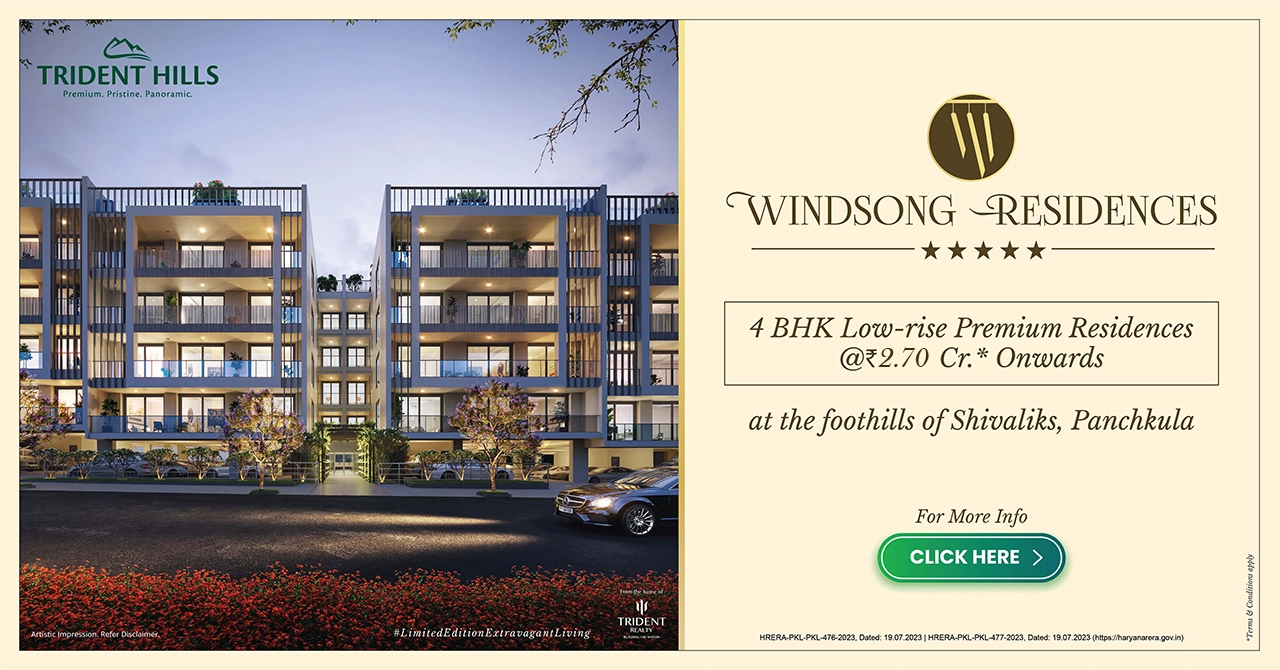
A compelling example of these principles in action is Trident Hills in Panchkula, which serves as an ideal canvas for the measurable health ecosystem. Nestled in the foothills of the Shivaliks and flanked by the Bir Shikargarh and Sukhna Wildlife Sanctuaries, the township begins with a distinct geographical advantage: baseline air quality significantly cleaner than the dense urban smog of the NCR metros. However, it is the architectural intent that elevates it from "scenic" to "biometric-ready." The project’s low-rise Windsong Residences utilize a specialized Louvre Design to maximize cross-ventilation, naturally mitigating CO₂ buildup without sole reliance on mechanical systems. Furthermore, integrating smart home automation for HVAC control and biometric door locks aligns perfectly with the "sensor-rich" infrastructure required for modern wellness monitoring. By combining a low-density, oxygen-rich environment with future-ready digital infrastructure, Trident Hills effectively bridges the gap between passive nature and active health management.
Conclusion: The Ultimate Luxury is Longevity
The definition of a 'dream home' in India has fundamentally shifted. It is no longer just about the address or the aesthetics; it is about the air you breathe and the lifespan you secure for your family. As we navigate an era of urban environmental challenges, the home must evolve from a passive shelter into an active guardian of your health.
Homes that actively protect your well-being will define the next decade of Indian living. Whether you are considering a move to a wellness-first township like Trident Hills or upgrading your current residence, remember this: in the cacophony of modern urban life, the ultimate luxury is silence, safety, and a deep breath of pure air.