









Why Modern Parents Are Choosing Communities Over Standalone Homes
Observe a typical evening in a traditional, high-density urban neighbourhood in India, and a stark pattern emerges. Children play cricket in narrow, vehicle-choked arterial lanes, pausing constantly for passing cars. Parents stand vigil at the main gates, their attention fixed on fast-moving traffic. Meanwhile, an escalating reliance on digital screens fills the quiet voids of indoor spaces.
This scenario represents a growing challenge for modern urban families. The physical layout of traditional neighbourhoods is increasingly out of step with the requirements of contemporary family life.
Consequently, a profound shift is occurring in how families select their residences. Modern parents are no longer evaluating homes only as physical assets or isolated indicators of square footage. Instead, they are evaluating entire environments that directly influence their children’s safety, physical development, daily routines, emotional well-being, and long-term quality of life.
The traditional preference for isolated standalone homes—once considered the ultimate symbol of autonomy—is steadily being replaced by a preference for integrated communities, planned townships, and gated residential ecosystems. This transformation is reshuffling the priorities of the Indian property sector. It positions behavioural psychology, childhood development, and structural predictability at the core of contemporary residential planning.
1. Parenting in Modern Cities Has Become Increasingly Complex
Raising a family in a contemporary urban hub requires navigating continuous environmental friction. Rapid, vertical growth has reshaped Indian cities, often prioritising vehicular infrastructure over pedestrian spaces and communal areas. For families, this structural shift creates everyday challenges. Fragmented neighbourhoods offer few safe spaces, making simple activities like a morning bicycle ride or an evening stroll require careful logistical planning.
Beyond physical limitations, the psychological strain of dense urban cores is well-documented. Global public health research has consistently linked access to open spaces and outdoor activity with improved physical and mental well-being among children.
When neighbourhoods are fragmented, social networks break down, leaving children isolated in their apartments. This spatial confinement accelerates screen dependency, a primary concern for modern parents. This context explains why property decisions are increasingly behaviour-driven. Families are actively seeking alternative environments that can restore spontaneity, safety, and physical movement to their children's everyday routines.
2. The Shift from Houses to Environments
Due to these urban pressures, residential real estate is being re-evaluated through a functional lens. The traditional home-buying journey was defined by internal variables: kitchen layout, flooring quality, and interior specifications. While these factors remain important, they are no longer viewed in isolation. Modern parents recognise that a beautifully designed interior cannot compensate for a chaotic, polluted, or disconnected exterior.
Families are prioritising environmental quality over simple asset ownership. They view their home as a complete ecosystem that encompasses the surrounding streets, neighbouring parks, air quality, and the social circle available right outside their front door. This shift has altered the criteria for defining luxury homes in India.
True luxury is no longer defined by ornamental excess. It is defined by the freedom of space, clean air, structural predictability, and an environment that supports a healthy, balanced lifestyle for every generation of the family.
3. Safety as a Foundational Decision Driver
For parents, safety is rarely an amenity—it is a fundamental requirement. Before considering aesthetics, layouts, or specifications, families want assurance that their children can move, play, and grow within a secure environment. Standalone homes, while offering individual privacy, place the full logistical and financial burden of security, infrastructure maintenance, and spatial surveillance onto the individual homeowner.
Integrated communities address this challenge by building an architecture of trust directly into the master plan. Controlled perimeter access, professional security management, and smart surveillance grids ensure that the entire neighbourhood operates as a secure zone.
Crucially, this planning enables a pedestrian-centric internal design. By separating vehicular roads from pedestrian walkways and dedicated play areas, townships minimise the risk of accidents.
This high level of structural predictability provides immense emotional reassurance to parents. When the entire residential layout is designed with open sightlines and supervised zones, parents gain peace of mind. Children can regain a sense of independent mobility, exploring their neighbourhoods safely without needing constant adult supervision at every turn.
4. Why Outdoor Access Has Become Essential
The correlation between regular contact with nature and childhood development is backed by extensive behavioural research. UNICEF’s child-friendly city frameworks consistently emphasise that daily exposure to green infrastructure improves cognitive function, enhances motor skills, and promotes emotional resilience in children. Yet, in traditional urban setups, visiting a park often involves navigating traffic or driving to a distant public space.
Planned townships solve this friction by making nature a foundational element of the landscape, ensuring it is always within walking distance.
By weaving nature into the neighborhood layout—through features like interconnected green corridors, running paths, diverse sports zones, and local orchards—communities make outdoor recreation a seamless daily routine. This encourages children to venture outdoors to play, ride bikes, or discover their surroundings instead of staying sequestered indoors. Such consistent proximity to nature fosters healthier lifestyles, alleviates stress, and serves as an essential counterweight to the pressures of academics and screen time.
5. Social Ecosystems and Childhood Development
While physical infrastructure is vital, the social fabric of a neighbourhood is equally critical to a child's development. Isolated, standalone homes often lead to an insular lifestyle, where social interactions must be deliberately arranged through scheduled playdates. This lack of spontaneous peer interaction can slow down the development of essential social skills, such as collaboration, conflict resolution, and empathy.
Integrated communities function as organic social platforms. When a neighbourhood unites families with shared values and lifestyle priorities, it creates a supportive community network. Children benefit from a reliable pool of peers, forming friendships naturally in common parks, skating rinks, and community clubhouses.
This shared environment helps children build confidence and a strong sense of belonging. For parents, this collective social setup offers a dependable support system, creating a cooperative parenting environment where families look out for one another's well-being.
6. The Psychological Comfort of Planned Living
Modern parenting involves managing a high cognitive load, balancing demanding career goals with family schedules, school transport, and extracurricular activities. Living in an uncoordinated neighbourhood adds further complexity, introducing unpredictability, including sudden utility disruptions, unmaintained roads, inconsistent security, and a lack of immediate recreational options.
A master-planned community acts as a valuable countermeasure against this daily friction, introducing structural reliability into the family routine:
Integrated Conveniences: Grocery stores, early-childhood daycare centres, and essential services are placed within the township perimeter, reducing daily commute times.
Predictable Infrastructure: Dedicated maintenance teams handle waste management, power backups, water filtration, and landscaping, removing everyday management hassles from homeowners.
On-Site Recreation: Top-tier athletic academies, pools and creative studios eliminate the need to drive across the city for weekend activities.
By consolidating these amenities within a single, managed ecosystem, planned townships reduce daily friction. Parents can save valuable time and mental energy, allowing them to focus on meaningful family interactions rather than managing neighbourhood logistics.
7. Why Standalone Homes Are Losing Appeal for Many Families
The independence of a standalone home comes with significant hidden challenges. From an analytical perspective, a standalone property is highly vulnerable to changes in its immediate surroundings. A resident cannot control whether an adjacent plot becomes a commercial storefront, a high-rise structure that blocks natural light, or an unmanaged space that compromises local security.
Furthermore, standalone homes lack the economies of scale that modern residential communities offer. Providing individual round-the-clock security, maintaining a private pool or garden, and installing power backups is expensive and time-consuming.
For working parents, managing these tasks can feel like a second job. The risk of neighbourhood deterioration and the lack of a built-in community make standalone options less practical for families seeking long-term stability and quality of life.
8. The Rise of Wellness-Led Residential Planning
The future of real estate design is shifting toward health, wellness, and multi-generational liveability. Real estate consultancies like CBRE and JLL report a clear premium for low-density developments that prioritise clean-air indices, solar orientation, and expansive open areas.
This wellness-driven philosophy looks at the long-term impact of spaces on human health. It involves incorporating large green buffers to shield residents from noise pollution and maintaining low-density planning to avoid overcrowding. When a community values clean air, natural light, and quiet spaces, it creates a restorative environment where families can truly thrive.
9. The Indian Urban Context
This lifestyle shift is accelerating rapidly across India's premium property hubs. The rise of hybrid work cultures has shifted priorities, as parents spend more time working from home and demand more from their direct surroundings.
This trend is clearly visible in the changing demands of buyers seeking properties in the Chandigarh capital region and across northern India. As historical city centres become increasingly congested, families are actively seeking out the best residential societies in Panchkula.
Buyers are looking beyond traditional metropolitan options for areas that combine modern corporate infrastructure with natural landscapes. This demand has made real estate in Panchkula a preferred destination for discerning buyers, as families look for communities that offer a balance of fresh air, open space, and premium amenities.
10. Why Integrated Townships Are Better Positioned for the Future
Traditional housing models struggle to adapt to these evolving lifestyle requirements due to spatial limitations. Integrated townships, by contrast, possess the scale and structure needed to build a complete family-centric ecosystem from the ground up.
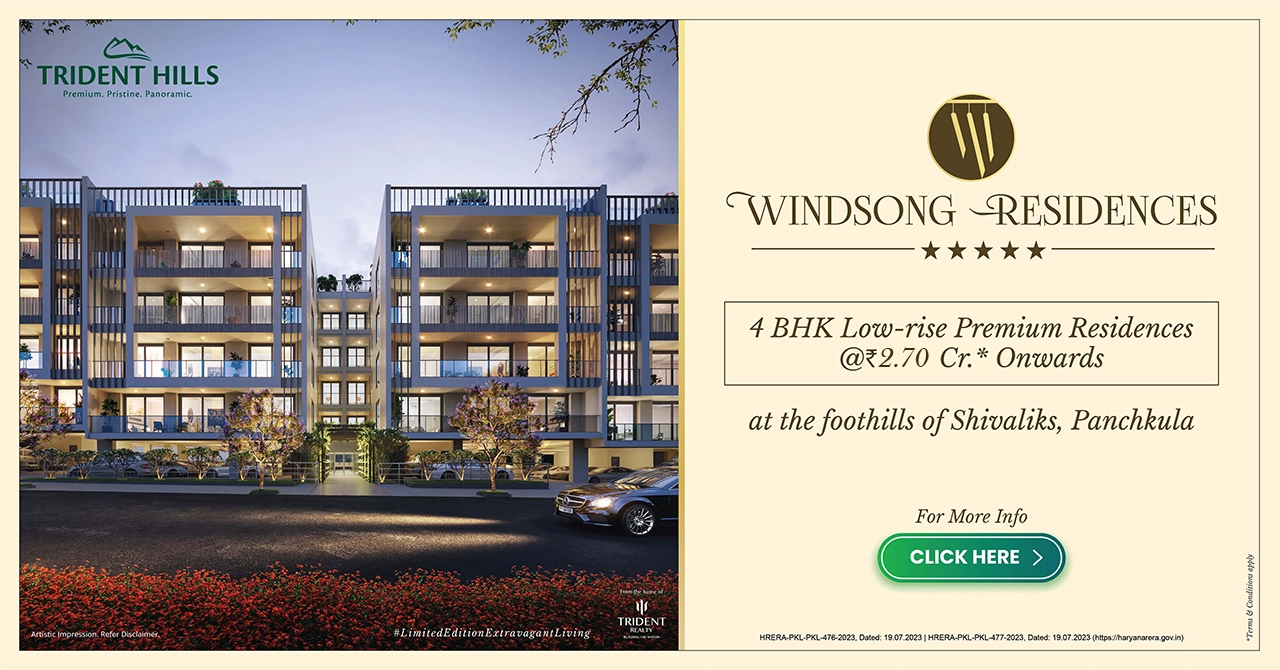
This forward-thinking approach is central to Trident Hills Panchkula, an integrated township developed by Trident Realty. Spread across 200 acres in the foothills of the Shivaliks, the development stands out among residential projects in Panchkula for prioritising human well-being and environmental integration.
Master-planned by Trident Realty Panchkula, the community avoids high-density vertical clusters, focusing instead on low-rise floors and independent plots that preserve open sightlines. This layout ensures that families looking for a 3 bhk in Panchkula enjoy both individual privacy and open spaces.
With dedicated sports facilities, car-free green paths, and essential amenities built directly into the site, the project shows how careful planning can enhance daily living. As experienced real estate builders in Chandigarh innovate for the next generation of buyers, this focus on wellness and community positions Trident Hills as the best housing society in Panchkula for forward-thinking families.
Conclusion
The evolution of modern family housing highlights a clear reality: our living environments shape our daily lives. The challenges of modern city living have shown that a home must be more than a physical structure or a financial investment; it needs to be a supportive habitat for growth.
As families look to the future, the choice between standalone isolation and an integrated community becomes straightforward. The ideal home is no longer defined only by walls and square footage—but by the environment that surrounds everyday life. The future belongs to developments that create space for connection, health, security, and the enduring comfort of a true community.